Nana answers the birthday cafe backlash
Nana has responded directly to criticism that followed her first public appearance with T.O.P at a fan-organised birthday cafe event. According to Koreaboo's report on 5 November, the couple were seen together at the cafe marking T.O.P's birthday, an appearance that drew a mixed reaction. Some fans were pleased to see them together; others questioned the setting and linked their frustration to an earlier fan controversy involving T.O.P. The report refers to that earlier dispute but does not set out its details.
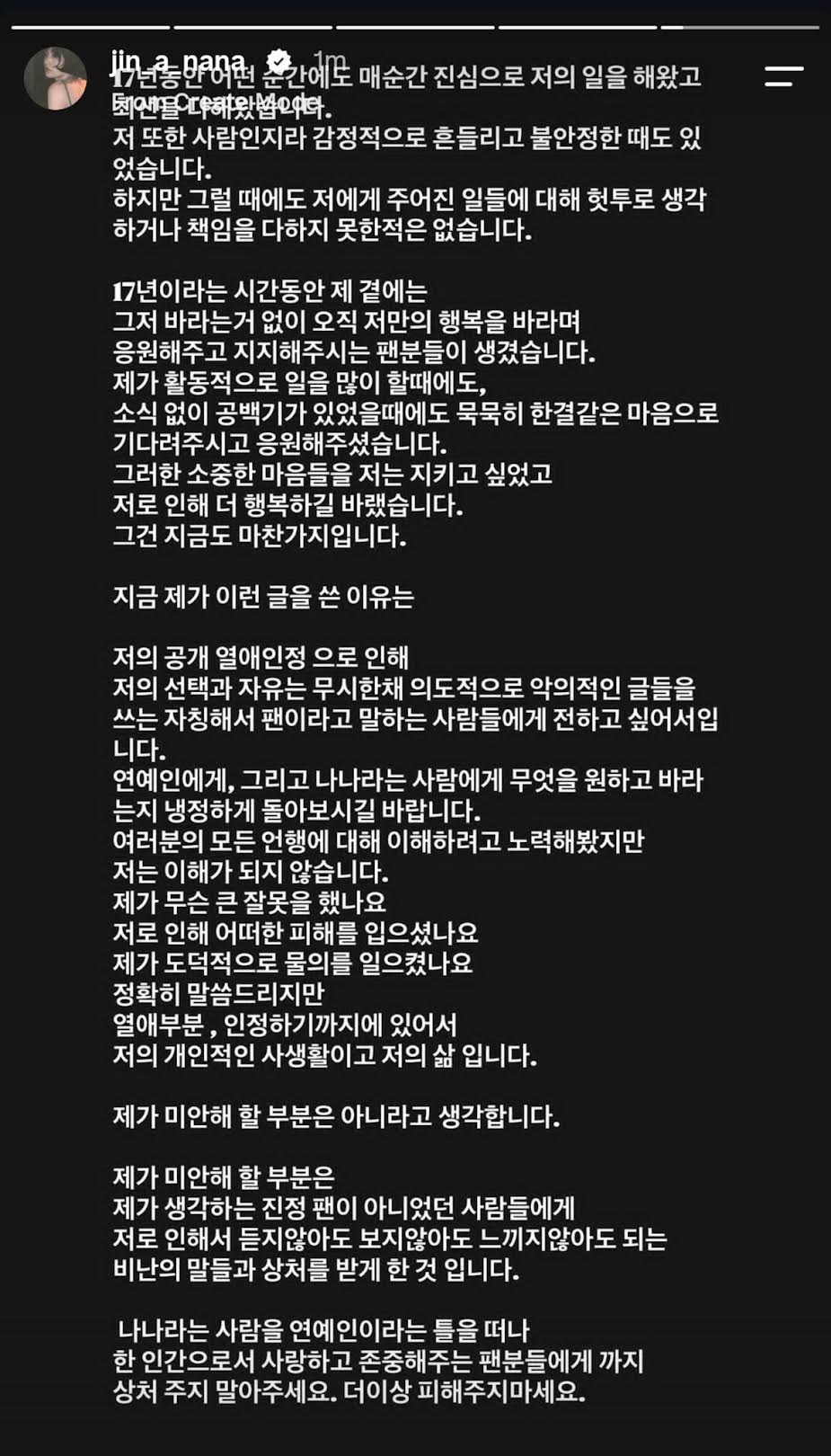
Nana's response came in an Instagram story. She did not apologise for the relationship. Instead, she framed her relationship and her decision to acknowledge it publicly as matters of private life and personal choice. That directness is the news: a confirmed K-pop relationship has become a flashpoint not only over dating itself but over what fans expect from an idol's public conduct and what a celebrity is willing to concede.
What happened at the cafe
Koreaboo reports that Dispatch revealed the relationship earlier this year. The birthday cafe was the couple's first public appearance together, and it surprised many fans. The event was not a formal press call or a televised appearance. It was a fan-organised birthday event, the kind of low-key gathering that K-pop fandoms routinely arrange to mark an idol's birthday with cups, banners and photographs. That setting matters because it placed a private relationship inside a space built around fan labour and fan affection.
Criticism cited in the report came from fan posts. One post described a 20-year fan account cutting ties with T.O.P and argued that bringing a girlfriend to a fan-organised birthday cafe was an unusual sight in K-pop fandom culture. Another post, described as a fanbase statement, made broader allegations about the agency's treatment of fans.
It claimed fans had been contacted late at night to revise outdoor billboard advertisements and asked, through a manager, to delete photographs, with a warning that T.O.P was a 'sensitive person'. The same post said fans had edited photographs of a fan meeting to make the venue look full. Koreaboo presents these as fan claims; the report does not include a response from T.O.P or his agency to those allegations.
The row therefore has two layers. The immediate trigger was the cafe appearance. The deeper complaint was about a fanbase that felt its time, money and emotional investment had been taken for granted. The report captures that sense of accumulated grievance rather than a single incident.
Nana's statement: career, fans and a boundary
In the Instagram story, Nana placed her career record at the front of her argument. She said she had approached her work with sincerity for 17 years and had never taken her responsibilities lightly, even during periods when she felt shaken or uncertain. She thanked fans who had waited through quiet stretches and supported her without asking for anything in return.
That framing matters because it separates professional conduct from private life: the statement argues that a long record of work is not erased by a relationship.
She then turned to the people she described as calling themselves fans while writing malicious posts. She asked what terrible thing she had done and what harm she had caused. She said her relationship and her decision to acknowledge it publicly concerned her private life and her own choices, and that she did not believe she should have to apologise for them. She added that her only regret was that people she regarded as not genuine fans had caused others to hear hurtful criticism.
She asked that fans who respect her as a person not be hurt further.
The statement is careful in one respect: it does not tell all fans to leave or dismiss every criticism as illegitimate. It draws a line around the relationship itself and around the decision to make it public. It does not address the specific fanbase allegations about billboard revisions, photo deletions or the treatment of fans. That gap is likely to matter because the criticism in the report is not only about dating.
Why the non-apology stands out
K-pop dating announcements have often been accompanied by apology, however carefully worded. The apology may be directed at fans for the surprise, at the group for the disruption, or at the industry for breaking an expected norm. Nana's statement refuses that script. She does not say sorry for the relationship. She says sorry only that other fans have been hurt by the fallout. The distinction is deliberate: it treats the relationship as a private fact that does not require a public mea culpa.
That does not make the statement a universal template. It is a personal response from a performer with a long career, and it is addressed to a specific audience at a specific moment. But it is unusual enough to explain why supporters seized on it. Posts cited by Koreaboo described it as a rare case of a Korean celebrity not apologising for falling in love and dating like a normal person.
The reaction shows that the apology script is still assumed, even when fans say they do not want it.
The fan labour question behind the anger
The birthday cafe controversy is also a dispute about fan labour. Fan-organised events are not casual gestures. They involve coordination, money, design, scheduling and negotiation with venues and sometimes agencies. When fans believe that work has been treated as unpaid staff labour, the arrival of a girlfriend at the event can feel like a symbol of a wider imbalance.
The fanbase post cited by Koreaboo makes that case explicitly: it describes late-night requests, advertising revisions and photo deletions, then asks why the same fans should quietly accept a partner at a fan event.
This is where the story becomes more than a dating row. The complaint is about reciprocity. Fans provide promotion, birthday events and online defence; in return they expect recognition, communication and a degree of control over the spaces they create. The cafe appearance tested that unwritten contract. Whether the fanbase's account is accurate, and whether T.O.P knew how the event was organised, are separate questions from the one Nana answered.
Two arguments are being merged
Much of the online reaction cited by Koreaboo pulls two separate arguments together. One is about privacy: a confirmed relationship is a personal matter and should not require an apology. The other is about fan treatment: a fanbase says it was overworked and disrespected, and it sees the cafe appearance as the final insult. Nana's statement answers the first argument clearly. It does not answer the second.
That helps explain why the response has been praised by some fans and is unlikely to satisfy the critics. Supporters read the statement as a boundary against malicious posting. Critics read it as a defence of the relationship that sidesteps the fanbase's account of how it was treated. Both readings can draw on the same text because the text is doing two things at once: it defends a private choice and it pushes back at people it says are not genuine fans.
The two sides are not arguing about the same thing, which is why the statement can be both clear and incomplete.
What the statement leaves open
Nana's post is a response to criticism, not a full account of the dispute. It sets out her view of the relationship and of malicious posting. The fanbase's claims about agency requests and edited photographs sit outside that frame. So do questions about how the cafe appearance was arranged.
The practical questions remain: whether the fanbase will receive an explanation, whether the agency will change how it works with fans, and whether the row will remain a dating story or become a broader conversation about fan treatment.
The statement does not close the dispute because it was not designed to arbitrate every claim. It was designed to say that a relationship is not a moral failing and that public acknowledgment does not create an obligation to apologise. That is a narrow argument, but it is a firm one. Its limits are also clear: it speaks to privacy and to malicious posting, not to the organisation of fan events or the behaviour of an agency.
The takeaway
The significance of the story lies in the collision of two expectations. Fans who organise birthday cafes and defend an artist online expect their labour to be recognised. A performer who has spent 17 years in public life expects her private relationships to be treated as private. Nana's statement makes the second expectation explicit. The fan posts cited in the report make the first expectation explicit. Neither has been fully answered by the other.
For readers, the useful question is not whether a celebrity should be allowed to date. That is already settled in Nana's statement. The harder question is what fans are owed when they build events around an artist, and what an artist owes back. The birthday cafe made that question visible. Nana's response made her own answer clear.