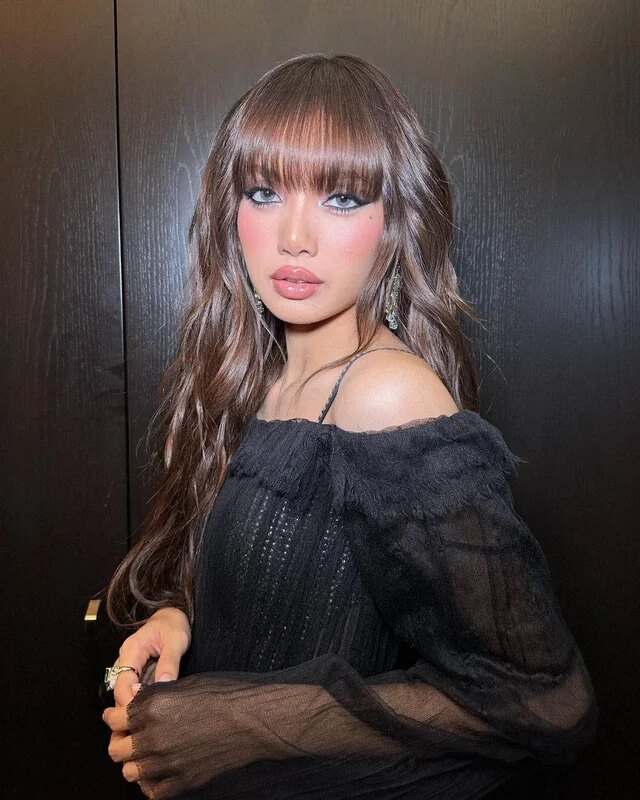

The posts, and the numbers behind them
BLACKPINK's Lisa has spent the past few days at the centre of a cluster of viral posts fixated on an extreme close-up image said to show fine hair on her stomach, according to reporting by Koreaboo. The posts appeared on X on 30 and 31 October and shared an almost identical framing: that a star with every means to arrange laser hair removal had apparently not done so. One of them, cited in Koreaboo's report, passed seven million views within a day.
That is the shape of the story. Nobody has accused Lisa of anything, no performance faltered and no release slipped. A handful of accounts took a picture, cropped and sharpened it until individual hairs were visible, and attached a caption expressing disbelief. The disbelief travelled further than almost anything else connected to her that week, which is the part worth pausing on.
Koreaboo's report is careful to describe the posts rather than the image itself, and that distinction matters here. What circulated was not candid backstage footage of a private moment so much as a deliberately magnified fragment, stripped of context and repackaged as a talking point. The question the posts posed was never really about hair. It was about whether a pop star is permitted to be a person in public.
Why the replies turned on the posters
The backlash was immediate and, by the accounts Koreaboo gathered, far more numerous than the original provocation. Replies quoted in the report argued that going out of the way to zoom in and inspect individual strands says more about the person doing the inspecting than about the subject. Others made the blunter point: adult women have body hair, and treating that as a discovery is not the revelation the captions seemed to think it was.
There is a rhythm to these episodes that regular users of K-pop social media will recognise. An account posts something designed to read as shocking, a second wave of quote-posts expresses outrage, and the two together push the original further up timelines. Lisa's fame does the rest. She is one of the most-followed idols in the world, and content attached to her name travels whether or not it has anything to say.
Some of the original posts were written in Japanese, and a portion of the responses generalised about Japanese users as a group. That framing drew its own objections from users who pointed out that a complaint about a few accounts is not a claim about a country. It is a useful reminder that pile-ons rarely stay pointed at the people who started them.
The ragebait suspicion, stated as a suspicion
Several users quoted by Koreaboo noted that similar posts had appeared on X within the previous few days, and suggested the whole thing might be ragebait: content engineered to attract angry engagement rather than to make a genuine point. Koreaboo's report relays that suspicion without corroborating it, and it is worth being clear that no evidence of coordination has been presented.
What can be said is that the pattern described fits a wider habit on social platforms, where appearance-focused posts about very famous people tend to be rewarded with reach regardless of intent.
This is where the story becomes less about Lisa and more about the machinery around her. An account that posts a reasoned observation about a song will usually reach fewer people than one that posts a provocative crop of a celebrity photograph. The incentive sits with provocation, and the costs are paid by the person in the frame. Recognising that does not require believing any particular account is part of an organised campaign. It only requires noticing what gets amplified.
A familiar kind of scrutiny for this group
This is not an isolated incident, and it is not even isolated within Lisa's group. Earlier this year BLACKPINK's Jennie faced fresh body-shaming after sharing ordinary Instagram photographs, a reminder that the scrutiny directed at these four performers rarely stays in one lane. It moves between them, attaches to whatever image is circulating, and finds a new subject within weeks.
Lisa has also spoken publicly, through her documentary work, about the volume of hostile commentary she encounters. A documentary scene about the hate she receives drew sharply divided reactions when it circulated, with sympathy from some viewers and accusations of dramatics from others. That split is instructive. Even when an artist addresses the abuse directly, the response is contested, and the argument about whether she should have raised it at all becomes the next story.
Read together, the pattern suggests a subject who has been discussed in these terms for years and a public that has not settled on what an appropriate response looks like. The absence of an official comment from Lisa or her label in Koreaboo's report is unremarkable in that context. Idols frequently let these waves pass rather than grant them a statement to quote.
What the episode reveals about image expectations
K-pop's presentation standards are unusually exacting, and they are built on layers of styling, lighting and post-production that are rarely acknowledged in the finished product. When a photograph slips past those layers, or appears to, the gap between expectation and reality becomes a talking point in itself. The more polished the image, the greater the perceived shock when a detail looks ordinary.
There is a specific absurdity in the current case. A performer's professional output involves choreography, vocals, recording sessions and stagecraft; a magnified photograph of her midriff involves none of it. The volume of attention doesn't reflect the significance of what prompted it, and that mismatch is the actual story here. Korean and international pop commentary has spent years debating beauty standards and the pressure idols face to meet them.
This episode shows what that pressure looks like when it's turned inward by audiences rather than imposed by companies — fans and casual viewers policing details that nobody on a stage was ever asked about.
It also shows how quickly a conversation about appearance becomes a conversation about who is allowed to comment. The loudest replies to the original posts were protective. They pushed back, named the behaviour as odd and moved on. Where the posts aimed to generate outrage, they generated defence instead, and that is a more interesting outcome than the original crop.
The takeaway
What happened to Lisa this week is a small, oddly intimate example of a much larger problem: the ease with which a famous woman's body becomes raw material for engagement, and the speed with which the discussion moves away from anything she actually did. The posts are not a scandal. They are a measurement of how far a cropped photograph can travel when the subject is famous enough and the framing is provocative enough.
The useful response is neither to pretend the scrutiny is harmless nor to treat it as evidence of an organised plot. It is to notice what was rewarded, and by whom, and then to decide whether to keep feeding it. Lisa's actual work, on stage and in the studio, remains the thing worth arguing about. A photograph of her stomach is not.