What happened on ATEEZ's TikTok
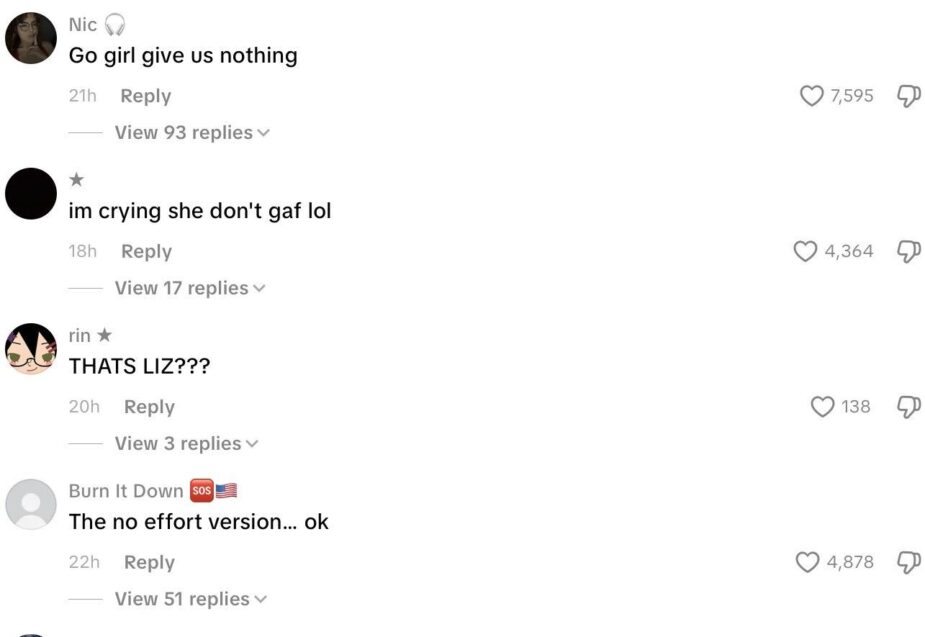
IVE's Liz has become the target of a hostile comment section after appearing in a TikTok with ATEEZ's San, Koreaboo reported. The clip was part of the 'Drip' challenge, tied to ATEEZ's recent release of the song 'Drip'. Liz joined San for the video, and the response in the comments quickly turned on her, with some users accusing her of not putting effort into the challenge. Koreaboo quoted a comment reading 'Give us nothing….'
The practical significance is straightforward: a promotional clip meant to connect two audiences has become a focal point for criticism of Liz's demeanour. That matters because TikTok challenges are designed to be low-stakes, cross-group moments. When the comment section becomes the story, the clip stops functioning as promotion and starts functioning as a referendum on the artist taking part.
Koreaboo characterised the response as a wave of brutal hate. The report also makes clear that the criticism was not unanimous. Some commenters defended Liz, arguing that the video was a dance challenge rather than a stage performance and should be judged on those terms. That split is the most useful part of the story because it shows how quickly a short clip can be read in incompatible ways.
Why the 'Drip' challenge put Liz in the frame
ATEEZ's 'Drip' is the promotional anchor here. ATEEZ recently released the song, and challenge videos are a standard way to keep a release visible after the initial push. San's invitation to Liz brought IVE's audience into ATEEZ's orbit, and the reverse is also true: the clip put San in front of IVE fans who might not follow ATEEZ closely. IVE and ATEEZ occupy different corners of the K-pop landscape, which is exactly why a shared challenge can travel.
On paper, that is what a challenge should do. It is short, shareable and built around a recognisable move. The focus is meant to be the song and the collaboration, not a detailed performance review. The format works because it feels informal: two artists in the same frame, trying a dance, giving fans something to pass around.
That informality is also the weakness. A challenge clip is not framed like a music show stage, but it is still public, permanent and open to comment. Once a clip is online, the context in which it was made matters less than the frame that commenters choose. In this case, the frame became Liz's perceived energy rather than the cross-group collaboration.

The defence: context and the calmer version
The defence came quickly. Some commenters argued that Liz was taking part in a dance challenge, not a stage performance, and that the clip did not call for the same intensity as a music show. Others pointed out that San had also done a calmer version of IVE's dance challenge, which makes direct comparisons of energy levels between the two clips less straightforward than they first appear.
This is the most useful context in Koreaboo's report. It does not settle whether Liz's contribution was to everyone's taste. It does explain why some viewers saw the criticism as disproportionate. A challenge video is a collaboration between two artists and two fandoms; judging one participant in isolation misses the form.
The comparison also cuts both ways. If San can take a relaxed approach to IVE's challenge without it becoming a controversy, the question is why Liz's approach to ATEEZ's challenge was read as a failing rather than a style. That is not a claim about double standards in every case. It is a specific question about this clip and the way the comment section framed it.
What 'effort' means in a short challenge clip
Effort is one of the easiest things to project onto a short video and one of the hardest things to measure from it. A clip can be deliberately relaxed, hurried, rehearsed or improvised, and viewers bring different expectations. The source reporting supports the claim that some commenters accused Liz of not putting effort in. It does not establish what direction the clip had, how long it took to film or what Liz intended.
The more important distinction is between 'this clip is not for me' and 'this artist gave nothing'. The first is a response to a piece of content. The second is a judgement about a person, and it travels much further than the clip itself. Comment sections often collapse that distance in a few words.
That collapse is what turns criticism into a pile-on. A viewer can find a challenge video flat without turning it into a verdict on the artist's work ethic. The format is too small to carry that weight, and the source does not provide the kind of detail that would justify a broader conclusion.

Why the criticism landed on Liz
The episode stands out because the criticism centred on Liz's presence rather than the decision to make the clip. San's part in the challenge has been discussed mainly as context; Liz's has been discussed as a failing. That imbalance is not unique to this clip, but it is the detail that makes the backlash worth examining rather than simply noting.
None of that means every critical comment was abusive. Koreaboo characterised the response as brutal hate, and the quoted comment is dismissive rather than analytical. The distinction matters: audiences can dislike a challenge video without turning it into a character judgement. The pile-on begins when the second step becomes automatic.
For readers who follow IVE or ATEEZ, the episode also raises a practical question about how cross-group content is received. Challenge videos are meant to be a meeting point between fandoms. When one participant becomes the target of a comment-section wave, the next collaboration becomes easier to overthink. That is a loss for the format, not just for the artist involved.
What the clip can and cannot tell us
A short challenge video cannot show rehearsal time, creative direction, nerves or how the two artists approached the shoot. Neither San nor Liz has publicly responded in the source reporting, and Koreaboo does not quantify the backlash. That leaves the confirmed facts narrow: the clip exists, Liz appeared in it with San, and the comment section turned hostile.
Those limits are worth keeping in view. They do not make the criticism meaningless, but they do make some of the stronger claims about Liz's attitude impossible to verify from the clip alone. The same applies to defences that treat the video as proof of a relaxed working relationship. The clip is evidence of a collaboration, not a full account of it.
The uncertainty is part of the story rather than a gap to fill with speculation. The source gives enough to describe what happened in the comment section and how some viewers pushed back. It does not give enough to know what was said behind the scenes, and the article should not pretend otherwise.

Takeaway: a challenge is not a referendum
Cross-group TikTok challenges work because they are small, informal and easy to share. They give fans a glimpse of artists from different groups in the same frame, and they can introduce a song to listeners who would not otherwise seek it out. That informal setting is also what makes them vulnerable to overreading. A pause, a facial expression or a lower-energy take can become the whole story.
The useful response is to keep the scale right. A challenge clip can be judged as a challenge clip. It can be found funny, flat, charming or awkward. What it cannot easily support is a sweeping verdict on the artist behind it. Koreaboo's report shows how quickly a light promotional moment can become a comment-section trial; the takeaway is to separate the two before joining in.
The clip with San and Liz was meant to be a small point of contact between two audiences. The backlash has made it something larger. Readers can decide for themselves how they feel about the video, but the source supports only a narrow account of what happened in the comments. That is the frame worth keeping.