The account Kim Sanghyuk gave
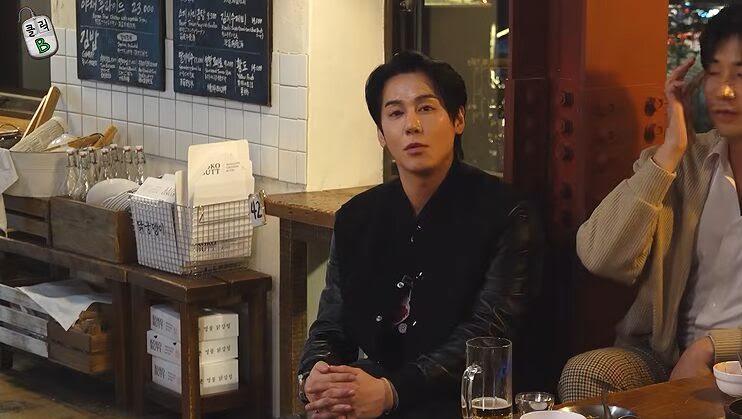
Click-B's Kim Sanghyuk has described being hit repeatedly during dance practice as a trainee, saying the punishment left him bleeding. He spoke about it in a video featuring the recently reunited group, who had gathered to look back on the height of their career, as reported by Koreaboo.
The conversation turned to who got into trouble most often during their training years. Kim did not hesitate. "I was definitely number one," he said, explaining that he was regularly scolded by both the manager and the dance instructor. He admitted he was not the most focused trainee, and recalled trading his restaurant meal vouchers for 1,000 won each so he could spend the money at a PC bang instead of eating.
That admission, offered lightly, sets up the sharper turn in the story: misbehaving as a teenager does not explain what came next.
When the subject of punishment came up, Kim described a dance practice in which he was struck with something he compared to a mop. The result, he said, was that his backside was bleeding. The detail is brief in the retelling and comes without drama from Kim himself, which is part of what makes it land: it is offered as a memory from a career retrospective rather than as an allegation being made for the first time to a reporter.
What Woo Yeonseok added to the picture
The fuller description came from fellow member Woo Yeonseok, who explained how the punishment was structured. The manager, he said, was not the person who carried out the hitting. Instead it happened during dance practice, where Kim was struck once for every mistake, and the blows continued as the mistakes accumulated. Woo said the manager later applied ointment to Kim while he was asleep, once the bleeding had become apparent.
That detail matters because it separates two roles that are easy to collapse into one. The person administering the punishment during practice and the person who dealt with the injury afterwards were not the same, according to Woo's account. Neither member identified which staff member was responsible, and no name was given for the dance instructor or anyone else present.
The account, as it stands, is the members' own recollection of events from years ago, offered in a group video rather than as part of any formal complaint or investigation.
Woo's framing was not simply that individual staff members behaved cruelly. He pointed out that the managers around the group were only about 27 or 28 years old at the time and were working without standards to follow. It is a description of a system that left young adults supervising even younger trainees, with no clear line between discipline and assault and no obvious route for either party to question it.
Lee Ho Yeon and the protection that depended on a person
Kim Sanghyuk also brought up the late DSP Media president Lee Ho Yeon, saying he cared about the trainees and would step in to stop the managers when things got rough. That detail sits awkwardly alongside the rest of the story, and it is worth being precise about why.
If the intervention depended on one senior figure noticing and choosing to act, then protection existed but was not built into the process. Kim's account suggests the president functioned as a brake rather than as the source of a rule. A structure in which the worst moments are prevented by a particular person's presence is one where the outcome varies depending on who is in the room, what mood they are in and whether anyone senior is paying attention.
Lee Ho Yeon's death means the group is now describing a chain of authority that no longer exists in the same form, and Kim spoke about him with evident regard rather than as part of a complaint against the company.
That is the tension running through the video. Kim is not presenting a case against an organisation. He is remembering people, including one he clearly respected, while describing something that would now be treated very differently.
Yoo Hoseok's different experience
Yoo Hoseok offered the contrast that makes the story harder to tidy away. He said he made it through his trainee days without being hit at all, and explained the reason in blunt terms: there were members they could hit and members they did not have to hit.
That line describes punishment as selective rather than uniform. It suggests decisions being made about who was a legitimate target, and it removes any suggestion that hitting was an unavoidable part of a fixed training method applied to everyone. Kim's response was to joke that he was the reason Yoo got off easily, and that without him around Yoo would have been hit a lot more.
The exchange drew laughter in the video, and the joke is Kim's own — it is not a claim about how the group feels collectively, and different members evidently came away with different experiences.
The contrast between the two men is the most useful part of the account for anyone trying to understand how this kind of treatment persisted. It was not a rule written down anywhere. It was discretionary, applied by individuals, and remembered decades later in very different ways depending on which side of the discretion you were on.
Why this surfaces in reunion content
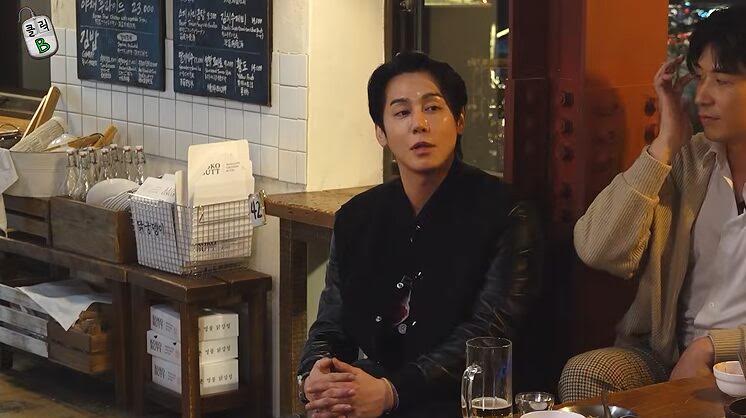
Click-B's return to public view is the setting for the story, and the setting shapes how it is told. Groups who reunite after a long gap are often asked to revisit their early years, and the format rewards anecdote: the worst-behaved member, the funniest memory, the strangest rule. Serious material tends to arrive inside that structure rather than in a setting designed for it.
For readers, that means the account comes with the texture of a conversation rather than the formality of testimony. It is not a statement, it carries no legal framing, and the members are not asking for anything. That does not make it less revealing. It does mean the details are fragmentary — the object Kim compared to a mop, the number of mistakes, the exact period — and that no one has yet been placed in a position to answer for them.
It also explains why the story has travelled. Audiences who have followed K-pop's older generations tend to know that training conditions in the late 1990s and early 2000s differed sharply from today's, but general awareness and specific detail are different things. A named artist describing bleeding after a practice session does more to fix that period in the mind than any summary of industry conditions could.
What the account asks of listeners now
The obvious temptation is to treat Kim's story as a closed chapter from a rougher era, something that could not happen now. There is some basis for that: the trainee system has been publicly scrutinised many times since Click-B's debut period, contracts and working conditions have been contested, and companies operate with far more visibility than they did then.
But visibility is not the same as accountability, and the members' own explanation — young managers, no standards — describes a problem that is not solved simply by passing years.
It is also worth noticing what the video does not do. Nobody in the group appears to be calling for an apology or naming the person responsible. Woo's detail about the ointment applied while Kim slept reads as an attempt to explain how a group of very young people handled a situation they were not equipped for, rather than as an accusation aimed at one individual.
That is where the story's value sits for a listener. It is a first-hand account of what discretionary discipline looked like in practice, and it is unusually clear about the mechanics: who hit, who treated the injury, who could have stopped it and who was never hit at all. Those specifics are more useful than outrage, and they are the part that is actually on the record.
The takeaway
Kim Sanghyuk's recollection is short, delivered without bitterness in a group video, and it contains one detail that does the real work: there were members who could be hit and members who could not. That sentence describes a system in which the line between training and violence was drawn by whoever happened to be in charge that day, and in which the consequences fell unevenly on the trainees least able to avoid them.
Click-B's reunion has given audiences a clearer look at that period than most retrospectives manage. Whether anything follows from it — from the group, from the companies involved or from an industry that now presents itself as reformed — remains open.