The post that became a group story
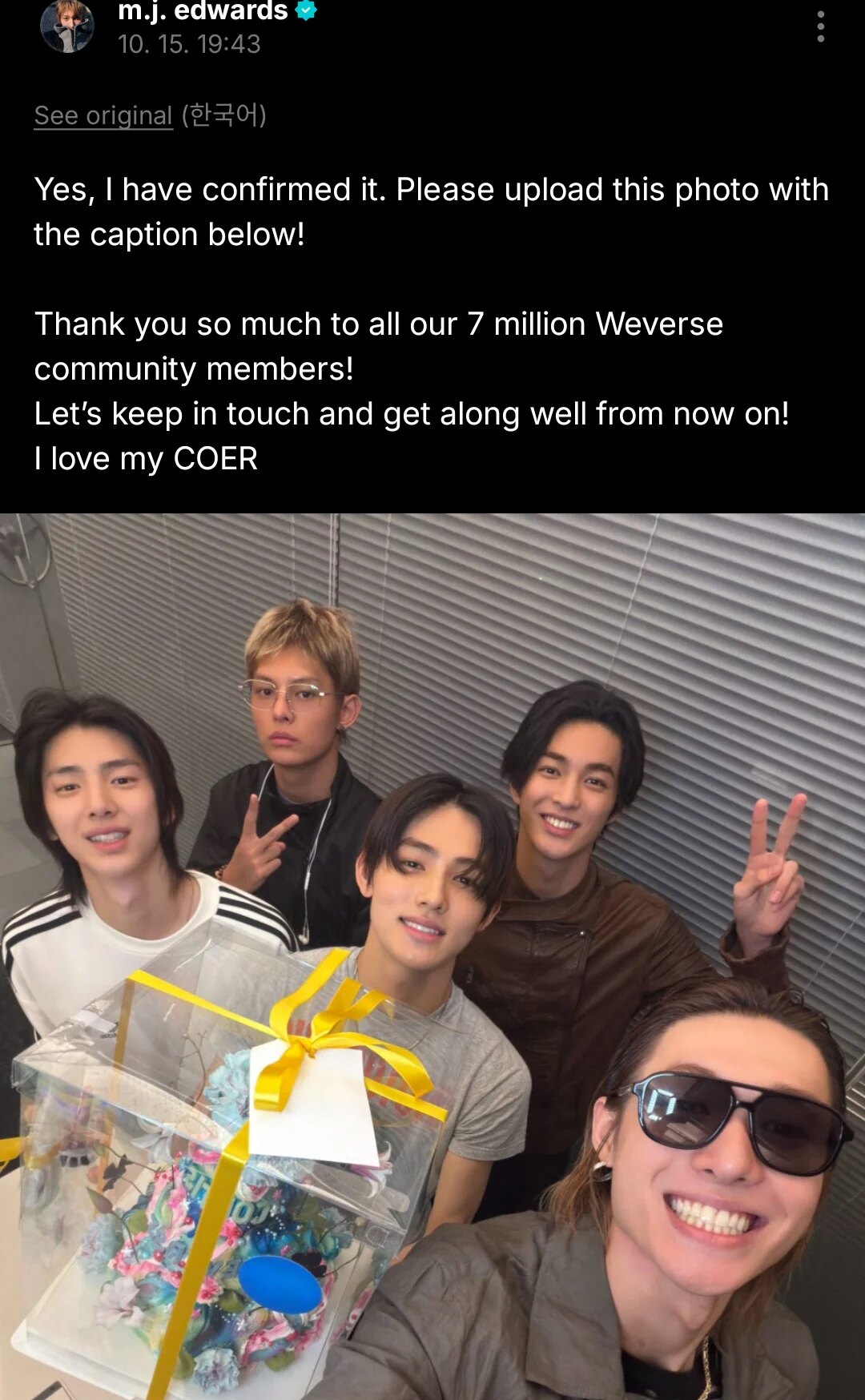
Koreaboo reported on 20 October 2026 that CORTIS's Martin deleted and then reshared a Weverse post after it seemingly shared that everything had been confirmed and approved by staff before the idol could publish it. International fans, according to the report, found the moment funny. The mood changed when Korean media outlets picked it up under a headline that bundled the deleted post with other criticisms: 'CORTIS faces embarrassment… Off-key live vocals → agency-approved wording exposed'.
The practical significance is larger than a single edit. A platform post that might have passed as a minor glitch became a frame through which the group's reception, training and agency relationship were discussed. The story moved from Martin to CORTIS as a whole, and from a caption to a argument about how much of an idol's communication is scripted, checked or presented as spontaneous.
Koreaboo's report describes the wording as seemingly indicating staff approval; it does not quote the full original post. That distinction matters because much of the reaction treats the wording as proof of a broader claim about the group. The verified facts are narrow: a post was deleted and reshared, it appeared to mention confirmation and approval, and the episode was then drawn into existing lines of criticism.
How a caption got bundled with live-vocal criticism
The Korean media headline quoted by Koreaboo is revealing less for what it says about Martin than for how it connects two separate ideas. The phrase about 'off-key live vocals' belongs to a line of criticism that predates the deleted post; the phrase about 'agency-approved wording exposed' gives that criticism a new hook. The arrow in the headline does the work of suggesting a pattern rather than a one-off mistake.
That framing is important because it changes the reader's starting point. A fan who sees the post as an endearing slip will read the deletion as a curiosity. A reader who encounters it through a headline about live vocals and agency control will read the same deletion as evidence that the group's presentation is manufactured. Neither reading is forced by the bare fact of the edit, but the second is more likely to travel as news.
The report does not establish that the live vocals were off-key, nor does it establish what the original post said in full. Those are separate questions from the question of how the headline framed the episode. Keeping them separate is useful: criticism of a performance and criticism of a social media caption may both be legitimate, but they are not the same claim.
Amusement and anger are not the same audience
Koreaboo reports a split in reaction. International fans saw humour in the deleted-and-reshared post; Korean media and community commenters were harsher. That split is not simply a matter of one audience being kinder than another. It reflects different reading habits: a post that looks like a relatable mistake inside one fan space can look like a revealing slip in a news cycle already primed for criticism.
Humour depends on distance. If the post is read as an idol accidentally showing the scaffolding behind a routine message, it can be funny because it is harmless. Criticism depends on pattern. If the same post is read as proof that even casual communication is signed off, it becomes part of a larger argument about authenticity. The same text can support both readings, which is why the reaction divided so sharply.
For readers outside the immediate fan community, the lesson is not that one reaction was correct. It is that platform context shapes interpretation. Weverse is a fan-community space; Korean media and community forums are different environments with different incentives. A moment that circulates as a joke in one place can be converted into a controversy in another without any new fact being added.
When criticism spreads to members who were not involved
The most troubling part of Koreaboo's report is not the criticism of the post itself but its spread. Commenters sent hate toward members who were not linked to the issue. The report describes remarks that questioned the group's skill level relative to HYBE's backing, characterised a world tour after one hit song as audacious, and made personal comments about a member's appearance. Those are not observations about a deleted caption. They are judgments about the group's right to attention.
This is where criticism of a social media mistake becomes something else. A fan can reasonably ask why a post was edited, what it revealed about agency review, or whether the explanation was clear. That is a conversation about communication. Attacking members who had no role in the post is a different activity, and it is the kind of backlash that makes the original issue harder to discuss calmly.
The source describes the reaction as brutal hate, and the examples it cites support that description. The distinction is worth preserving: criticism of a post can be answered; group-wide hostility usually cannot. Once the backlash attaches to people rather than to a decision, the practical question changes from 'what happened?' to 'what should fans do when a small mistake becomes a licence for pile-on?'

The approval question at the centre
The phrase 'agency-approved wording' is the most consequential part of the story. If a post appears to confirm that staff checked and approved it before publication, it can feed a perception that idol communication is scripted. That perception is not new in K-pop, but it is potent for a group still establishing its public identity. A caption that seems to reveal the process can be read as a comment on the group's authenticity, even if the post was only describing routine review.
There is a difference between staff review and a lack of authenticity. Many teams check artist posts, and a check does not by itself mean the artist has nothing to say. The controversy is about what the wording implied, not necessarily about wrongdoing. That distinction is easy to lose when a headline compresses the episode into a symbol.
The deleted-and-reshared sequence also matters because it leaves a record. Fans see edits, screenshots circulate, and media can quote the before and after. On a platform built for direct artist communication, that visibility is part of the appeal and part of the risk. A small correction can become a public text, and a public text can be read against everything else the group has done.
Debut pressure, HYBE expectations and the cost of a mistake
The comments cited by Koreaboo about HYBE's backing and about touring after one hit song are not neutral observations. They are characterisations offered by commenters, and they reveal the standard against which the group is being judged. For a group associated with a large company, early attention can be read as borrowed rather than earned. That reading makes every mistake carry more weight than it would for an act with a longer record.
This is the context in which a deleted post becomes a group story. The post did not create the debate about privilege, training or live performance; it gave that debate a fresh example. The backlash is therefore not proportionate to the edit. It is proportionate to the argument that commenters were already having about the group's place in the industry.
None of that makes the personal attacks fair, and it does not settle whether the criticism of the post was reasonable. It does explain why the episode travelled. A caption that might have been forgotten in a quieter news week became a hook for larger questions about how new groups are presented, promoted and judged.
The takeaway
The verified story is compact: Martin deleted and reshared a Weverse post, the post seemed to say staff had confirmed and approved it, international fans found it funny, Korean media framed it alongside other criticisms, and commenters directed hostility at members beyond the original issue. The rest is interpretation, and the interpretation should be labelled as such.
The useful question is not whether the edit was funny or embarrassing. It is where criticism of a post should stop and where hostility toward people begins. Koreaboo's report shows how quickly that line can be crossed when a small platform moment is fed into a larger argument about a group's legitimacy. The takeaway for readers is to keep the two conversations separate: one about communication and approval, the other about whether a group deserves the attention it receives.