
A November wedding with a clear public message
The wedding of Lovelyz member Yoo Jiae and actor Kwak Si Yang is set for 28 November at a hotel in Yongsan-gu, Seoul, according to a Koreaboo report citing Sports Seoul. The report centres on the couple's wedding invitation and the photographs that accompany it, giving readers a rare look at how the couple are framing the day in their own words.
For K-pop listeners, the practical detail is straightforward: a member of a well-known girl group and an actor are preparing to marry, and the date and district are now part of the public record. The significance lies less in spectacle than in tone. Rather than a brief announcement, the invitation carries a message about companionship, endurance and the decision to build a life together.
That makes the story a useful example of how Korean celebrity weddings are often communicated: a formal date, a venue, a set of photographs and a letter that speaks directly to family and friends.
The report's emphasis on the invitation also keeps the focus on the couple's chosen language, not on unattributed speculation. That choice matters because wedding coverage can easily drift into guesswork about guest lists or lavish details. Here, the source stays close to what the couple have written and how they appear in the invitation photographs.
The invitation's promise: companionship in good and hard times
The invitation's central promise is mutual care. According to the report, the couple write that meeting this person made them want to make that person happy, and that they realised they never wanted to leave them alone in difficult times. They go on to pledge that on good days they will be the one who rejoices more than anyone else, and on tough days the one who stands closest and endures together.
The wording is simple, but it sets out a model of marriage built on presence rather than performance. The good-day promise is generous; the hard-day promise is harder and more revealing. By placing both together, the couple avoid a purely celebratory tone and acknowledge that a wedding is also a commitment to ordinary, unglamorous support.
That distinction is worth noticing because celebrity wedding messages often lean on romance and celebration. Here, the report gives equal weight to rejoicing and endurance, which makes the invitation feel grounded. It also explains why the letter has become part of the story: readers can see how the couple describe the relationship in their own terms, without needing a longer interview or a dramatic reveal.
A request to guests, and a promise back
The second movement of the invitation turns outward to guests. The couple ask family and friends to come and warmly embrace the beginning of their journey, according to the report. They then promise that they will never forget the affection they receive that day and will protect each other and live well together.
This is a familiar wedding gesture, but it has a specific function. Asking guests to embrace the beginning frames the ceremony as a threshold rather than a finish line, while the promise to remember the affection gives the day a reciprocal quality. The couple are not only receiving congratulations; they are making a commitment to the people who show up for them.
For readers following K-pop weddings, that detail helps explain why invitations matter beyond logistics. They are one of the few places where a couple can address their public and private circles at once, setting the emotional terms of the event. The report does not present the letter as a statement about fame or fandom, and it is better read as a personal message that happens to be public.
The star metaphor at the heart of the letter
The most literary passage in the invitation is the star image. The report quotes the couple writing that someone once said they would reach out and pick a star from the sky, and that this warmth opened their heart and began their love. Now, they write, they will become each other's one and only star to light the way and walk together for a lifetime.
The metaphor is tender without being ornate, and it ties the letter's earlier themes together. A star is something distant that becomes a guide; the couple move from being the recipient of a grand gesture to being a source of light for each other. That shift is the emotional centre of the quoted message.
It also gives the wedding pictorial a natural companion: the photographs show the couple dressed formally, while the words describe a private understanding. Neither element needs to be over-interpreted. The point is that the invitation presents romance as both a feeling and a practical promise to illuminate the road ahead.
Why the wedding photos carry the story
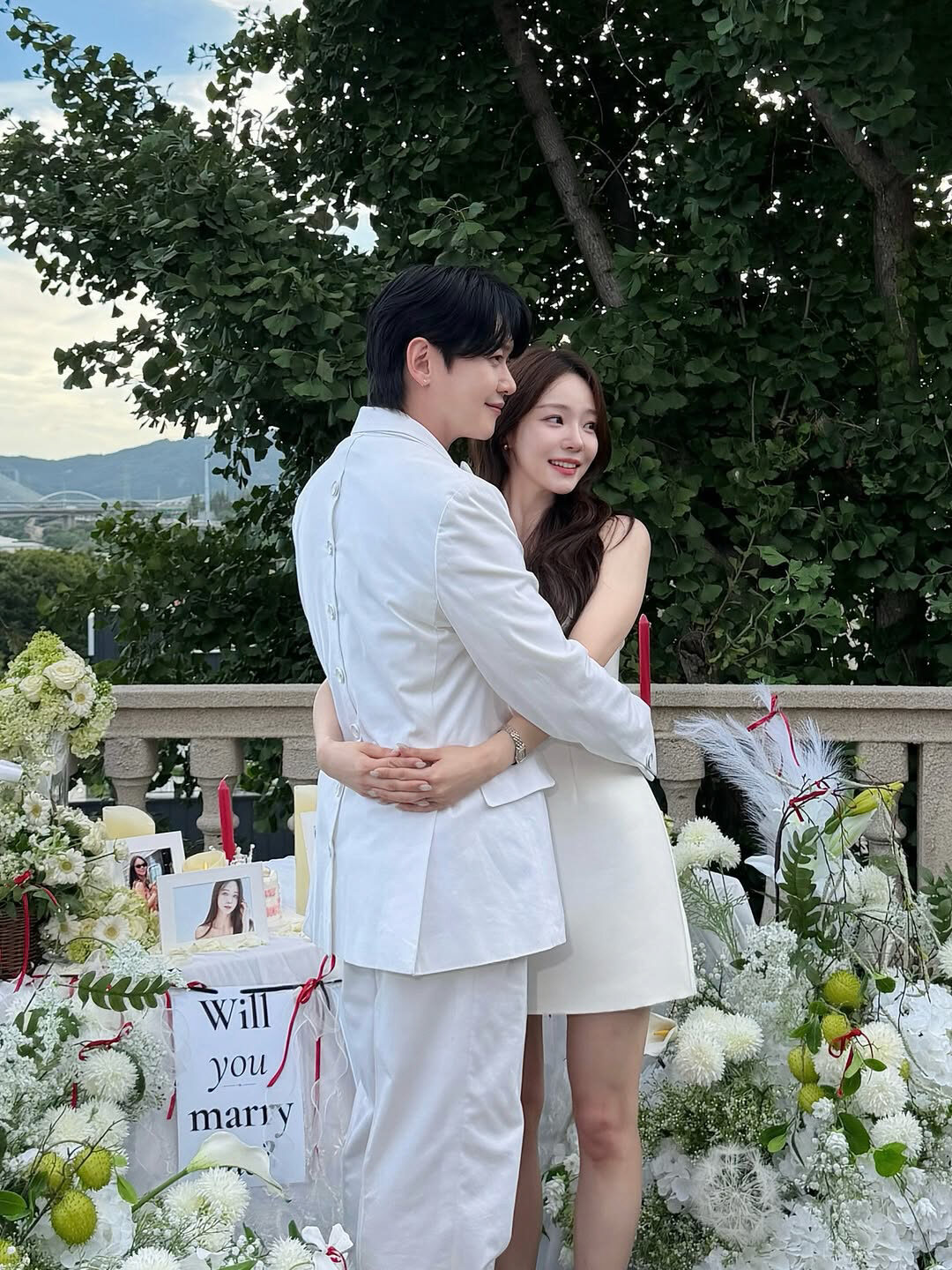
The photographs featured in the invitation are part of the report's appeal. Yoo Jiae is described as showing an elegant charm in a graceful wedding dress, while Kwak Si Yang is described as handsome in a stylish tuxedo. More important than the outfits is the report's observation that the way they look at each other conveys deep love and stirs exciting emotions.
Wedding photography is designed to communicate mood, and this set appears to do exactly that: it gives the couple a visual language that matches the letter's tone. For readers, the photos are not evidence of anything beyond the images themselves, but they do explain why the story has drawn attention. A wedding invitation is often the first time the public sees a couple styled for the occasion, and the contrast between formal clothing and intimate gaze is part of the ritual.
The report does not describe a lavish production or a celebrity guest list. Its focus stays on the couple, the clothes, the glance and the words, which is enough to make the announcement feel complete. That restraint is useful: it lets the invitation do the work of setting the scene without turning the wedding into a spectacle before the day itself.
What the details mean for readers following the couple
Beyond the date and venue, the report does not set out further ceremony details, so the invitation remains the fullest public statement quoted. That is worth keeping in mind when reading coverage of any celebrity wedding. A date and a district tell us where and when; an invitation letter tells us how the couple want the day to be understood.
The practical details are simple: 28 November, a hotel in Yongsan-gu, Seoul. The human details are more expansive: a wish to make each other happy, a refusal to leave the other alone in hard times, a promise to protect and live well.
For K-pop listeners, the story sits at the intersection of fandom and ordinary life. Yoo Jiae is known as a Lovelyz member, and Kwak Si Yang as an actor, but the invitation speaks in the language of family and friends. That is why the report's decision to lead with the letter is effective. It gives readers something to respond to beyond the headline, and it keeps the couple's own words at the centre.
The takeaway: words first, then the celebration
The takeaway is that this wedding announcement is built on a clear sequence: date and venue, then the couple's letter, then the photographs. Each part adds a different kind of information, and none of them requires speculation about the relationship. The result is a story that feels both public and personal, which is the difficult balance every celebrity wedding announcement has to strike.
Yoo Jiae and Kwak Si Yang have chosen words that emphasise care, endurance and mutual light, and the report presents those words without turning them into a larger claim about their private lives. For readers, the most interesting material is the invitation itself: a short, deliberate message that explains why the couple are marrying and what they hope the day will mean. The ceremony is set for 28 November; the language is already doing the work of inviting people in.