Kang Kyun Sung Tells the Story on Moo No Plan 4
Noel member Kang Kyun Sung has shared the story of his marriage proposal to actress Yoo Ha Jin during an appearance on MBN and Channel S's Moo No Plan 4, as reported by Koreaboo. The episode followed Jun Hyun Moo, Kwak Tube, Kim Jang Hoon and Kang Kyun Sung as they explored old restaurants in the ancient city of Gyeongju. Once the group had taken their seats, Jun Hyun Moo asked Kang directly what had happened, and the conversation moved from food to the proposal.
The first detail to hold on to is the timeline. Kang said he and Yoo had dated a few times nine years earlier, but the age gap felt overwhelming at the time. They reconnected through an acquaintance this February, and he described the relationship as leading to marriage after eight months. He also said he proposed just a few weeks before the broadcast.
The source text does not give a wedding date, and it does not include a separate comment from Yoo Ha Jin, so the account that follows is his retelling.
Nine Years, a Reconnection and Eight Months
Kang's account places the proposal inside a relationship that had already been tested by time and distance. The source identifies Yoo Ha Jin as an actress and a former girl group trainee who is 14 years his junior. Kang described the earlier age gap as 'a bit overwhelming then', a phrase that suggests the obstacle was not the connection itself but the timing and the difference in life stage.
That is a familiar theme in Korean entertainment stories, where reconnections years later are often presented as proof that the right moment matters as much as the right person.
What makes this version distinctive is how quickly the couple moved once they met again. Kang said they reconnected in February and are marrying after eight months. He did not present the engagement as a long campaign or a public courtship; the proposal came only a few weeks before he spoke about it on the show.
The speed is part of the story's appeal, but it is also the kind of detail that invites readers to wonder about the conversations that are not in the source. The broadcast gives the outline, not the full chronology.
A Salon Trip Framed as a Sponsorship
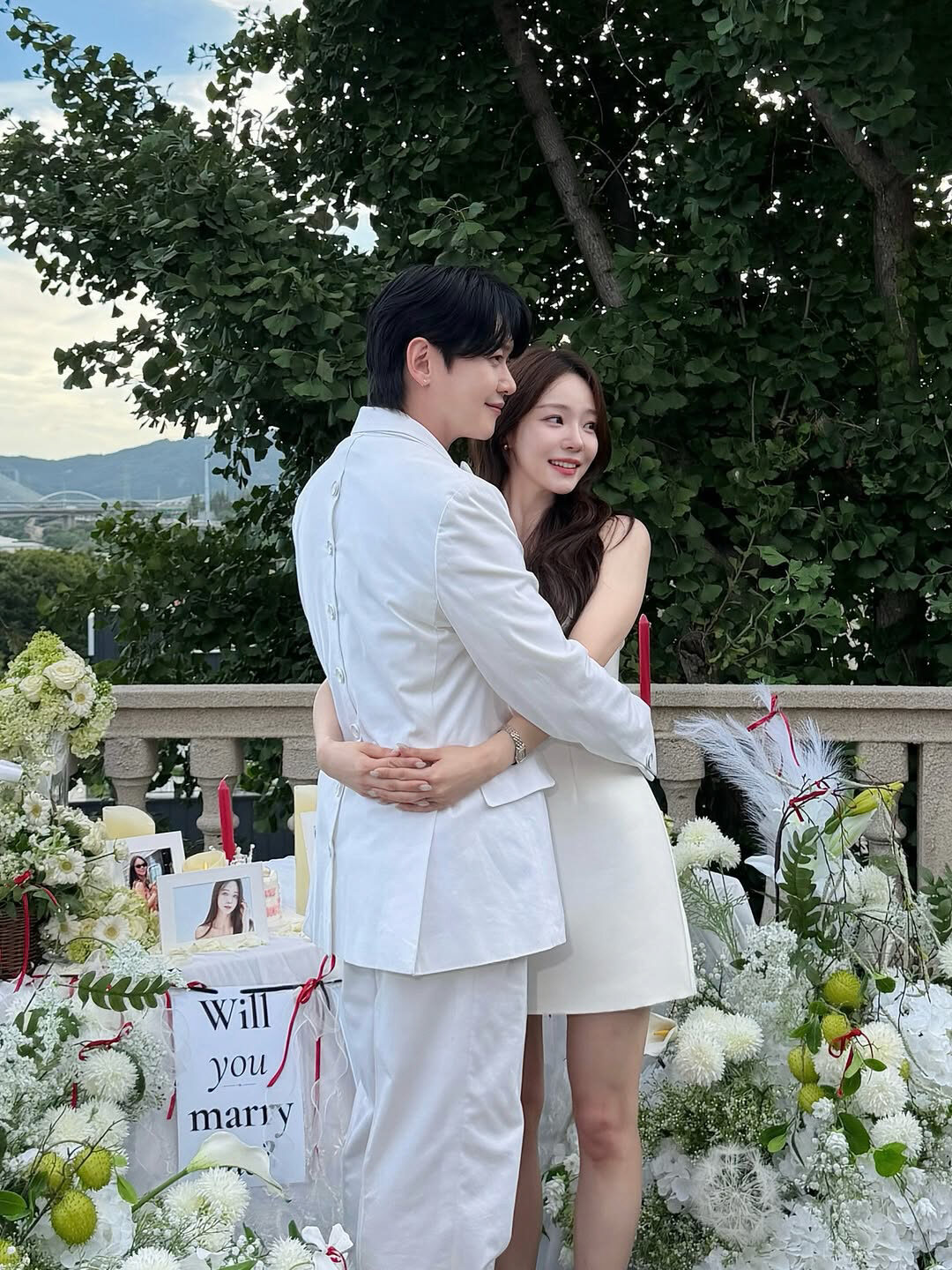
The proposal itself was built around a small deception. Kang said he thought his fiancée should look her best, so he tricked her by calling the outing a 'sponsorship' and took her to a salon for a full makeover. After that, he read her a handwritten letter and gave her a ring. 'It felt like a small wedding,' he said.
The sequence is specific enough to be memorable. A salon appointment framed as work, a letter read aloud, a ring offered after the makeover: each step turns an ordinary outing into a private ceremony. The detail about the 'sponsorship' is the kind of practical joke that only works if the other person trusts the person arranging it. It also keeps the proposal away from a public stage.
There is no restaurant full of spectators in Kang's account, no cameras and no performance for an audience beyond the couple. The source does not say how Yoo Ha Jin reacted in the moment, but the structure of the story is clear: the surprise was designed to make her feel looked after before she was asked a serious question.
The Table's Reaction and the Reverse-Order Joke
The show's other cast members gave the story a natural second act. Kim Jang Hoon asked, 'How do young people propose these days?' Jun Hyun Moo listened and later said, 'I learned something new today.' Their questions turned a personal anecdote into a conversation about how proposal rituals have changed, without needing to leave the restaurant table.
Kang then added a playful prediction about the group's marriage order. He noted that Kwak Tube is the youngest but married first, then Kang, so next is Hyun Moo. 'We're getting married in reverse order of age,' he said. The line is a gentle tease rather than a serious forecast, and it fits the tone of a travel-and-food show where the cast's banter is part of the appeal.
It also shows why the story landed on Moo No Plan 4 rather than in a formal interview: the proposal was revealed in a relaxed setting, with the group's reactions doing as much work as the details themselves.
Why the Detail Matters More Than the Announcement
Proposal stories travel because they turn a public milestone into a narrative with a beginning, a middle and a punchline. Kang's account has all three: the old connection that did not work the first time, the February reconnection, and the salon makeover that led to the letter and the ring. The source's version is built from a handful of concrete images, and those images do more than a generic statement about marriage ever could.
They give readers something to picture, which is why the story has moved beyond the initial announcement of the relationship.
There is also a useful distinction between a wedding announcement and a proposal story. An announcement tells us that two people are marrying; a proposal story tells us how they arrived at that decision, or at least how one of them wants the arrival to be remembered. Kang's version is careful to keep the focus on Yoo Ha Jin's experience of the day: he wanted her to look her best, he wrote a letter, he gave a ring.
Those choices are presented as care rather than spectacle. The account is still one-sided in the ordinary sense, because it is his retelling and the source does not include her own description of the proposal. That does not make the story less newsworthy, but it does mean readers should treat the sequence as his account rather than a jointly narrated version.
A Story Told in His Words
The broader takeaway is that Kang Kyun Sung has given audiences a proposal story with enough texture to stand on its own. The key facts are simple: he and Yoo Ha Jin reconnected this February, they are marrying after eight months, and he proposed a few weeks ago with a salon makeover, a handwritten letter and a ring.
The source does not supply a wedding date or further comment from Yoo Ha Jin, and the broadcast is the origin of the account as reported by Koreaboo. Those limits are worth keeping in view, but they do not erase the detail that made the story travel.
For readers, the interesting question is not whether the proposal was elaborate enough, but what makes a retold proposal feel genuine. Kang's story works because it is small and specific: a fake sponsorship, a salon chair, a letter read aloud. It is the kind of detail that invites listeners to compare it with their own idea of a meaningful gesture, and to decide whether the telling or the act carries more weight.