The Incident: A Fan's Public Callout and the Ensuing Backlash
A recent online post has stirred debate within K-pop fandom after a fan publicly criticised RESCENE member Liv, also known by her given name Kyungeun, for not visiting a birthday cafe event they had organised. According to reporting by Koreaboo, which cites the Korean community site theqoo, the situation arose after Liv's birthday prompted fans to open 17 birthday cafe events in her honour. Liv visited a few of these cafes and shared photos to express her appreciation.
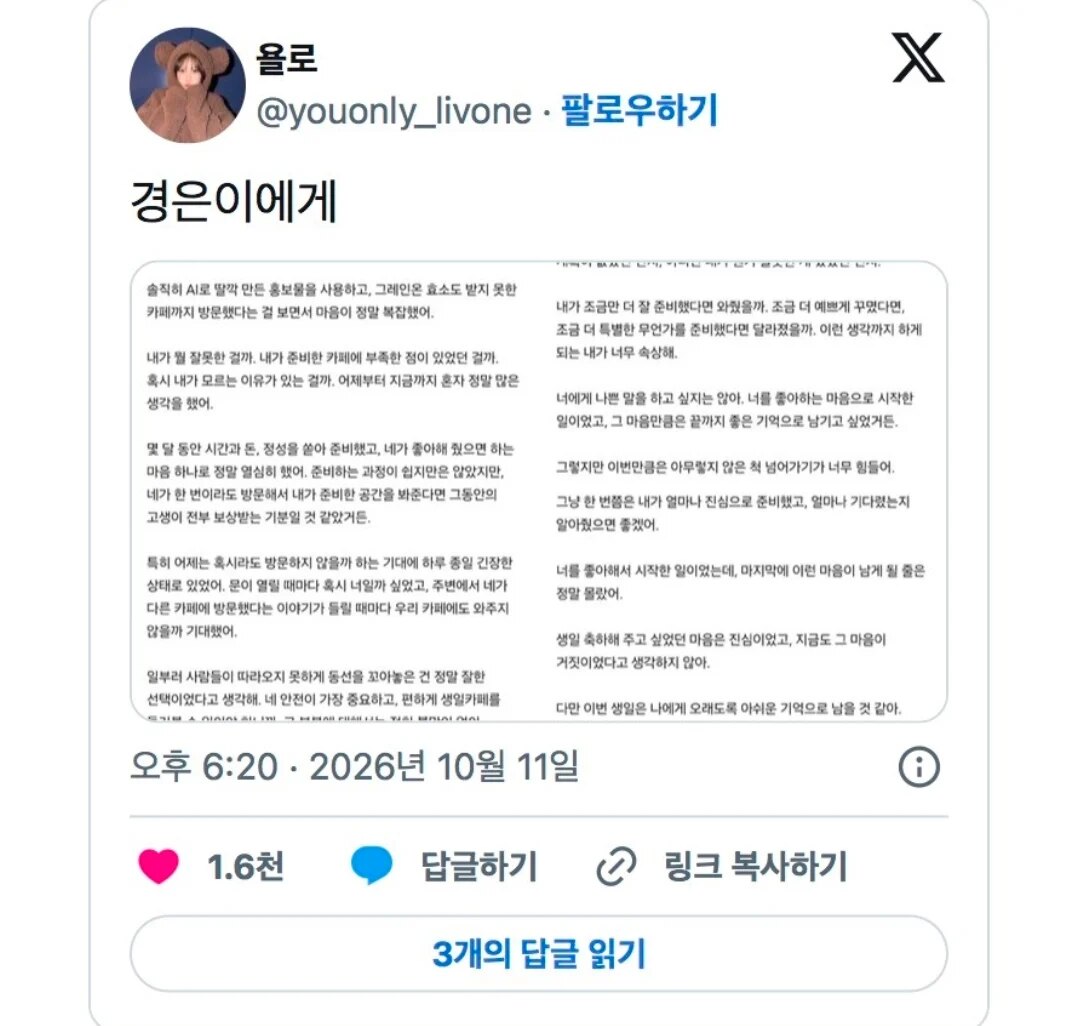
However, one fan who hosted a separate cafe took to social media with a lengthy post titled 'To Kyungeun', expressing disappointment that Liv had not visited their particular event.
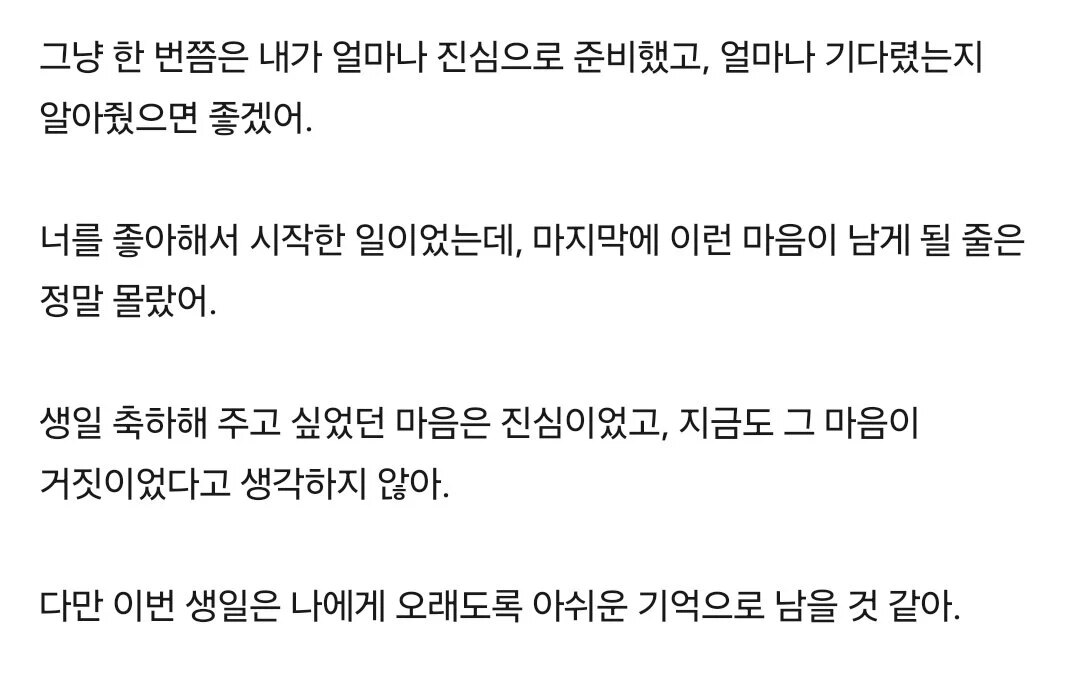
The fan's post described the money and time they had invested in preparing the cafe, and closed by stating that they hoped Liv understood how sincere they had been. The post also conveyed a sense of personal hurt, with the fan noting that they had started the project out of affection for the idol but had not anticipated feeling this way at the end.
They emphasised that their birthday wishes had been genuine, yet they anticipated this birthday would remain a disappointing memory for a long time. The public nature of the complaint quickly drew attention, leading to a wave of reactions from other netizens.
While many acknowledged that the fan's disappointment was understandable, the prevailing response was that such feelings should not have been aired publicly. Koreaboo reports that netizens felt the callout was inappropriate, with some expressing surprise at the direct criticism of an idol for missing a fan-run event. The incident has since become a talking point about the expectations placed on idols and the boundaries of fan expression, particularly when emotional and financial investments are involved.
The original reporting by Koreaboo highlights how a private feeling of letdown became a public controversy, sparking backlash not against the idol but against the fan who spoke out.
What Are Birthday Cafe Events? The K-Pop Tradition Explained
For those unfamiliar with K-pop fandom culture, birthday cafe events are fan-organised pop-up gatherings held to celebrate an idol's birthday. These events typically involve renting a cafe or similar venue, decorating it with photos, banners and balloons themed around the idol, and offering free drinks or merchandise to visitors who come to show their support. Fans often collaborate in teams, pooling resources and time to create memorable experiences.
The scale can vary widely, from a small local gathering to a multi-city series of events, depending on the idol's popularity and the resources of their fanbase.
These events serve multiple purposes. They are a way for fans to express devotion and creativity, to build community with other fans, and to demonstrate the strength and dedication of a fandom. For many participants, the act of organising or attending a birthday cafe is a meaningful part of their K-pop experience. It is not uncommon for idols to visit such events, either in person or by sending a message, as a gesture of gratitude.
However, attendance is not a contractual obligation, and the feasibility depends on the idol's schedule, location and other logistical factors.
The tradition reflects the participatory nature of K-pop fandom, where fans actively contribute to the promotion and celebration of their favourite artists. Yet it also creates a dynamic in which fans may develop expectations of reciprocity. When an idol visits one cafe but not another, it can inadvertently lead to feelings of being overlooked, especially when significant personal resources have been invested.
This tension is at the heart of the recent RESCENE Liv incident, illustrating how a well-intentioned cultural practice can become a source of conflict when expectations are not managed.
RESCENE and Liv: Who Is at the Centre of the Story?
RESCENE is a K-pop girl group, and Liv is one of its members. While the group's broader career details are not the focus of the original report, it is worth noting that Liv is known to fans by both her stage name and her given name, Kyungeun, as evidenced by the title of the fan's post. The incident has brought attention to her and the group, though the coverage has centred on the fan-idol interaction rather than on RESCENE's music or activities.
This is a reminder that in the K-pop ecosystem, an idol's public persona is often intertwined with the emotional investments of their fanbase.
For Liv, the birthday period appeared to involve a genuine effort to acknowledge fan support. According to Koreaboo, she visited several of the 17 cafes organised in her honour and shared photos to show her appreciation. She did not visit all of them, a fact that became the crux of one fan's complaint.
The source notes that there were 20 birthday cafes in total, and that Liv visited for about five minutes between schedules, with narrow roads preventing her from reaching cafes located on the same street. These details, provided by netizens in response to the callout, suggest that logistical constraints played a significant role in which events she could attend.
The episode places Liv in a difficult position. On one hand, she made an effort to recognise fan efforts by visiting some cafes. On the other, the public criticism implies that her efforts were insufficient for at least one fan. The situation highlights the impossible task idols often face: trying to meet the expectations of a diverse and passionate fanbase while managing professional commitments.
It also underscores how quickly a personal disappointment can become a public narrative, with the idol's actions scrutinised and debated by thousands.
The Fan's Emotional Investment: Why Disappointment Ran So Deep
The fan's post, as described by Koreaboo, reveals a deep emotional investment that goes beyond simply hosting an event. The individual spoke of spending considerable money and time, and of starting the project out of affection for Liv. This is a common pattern in K-pop fandom, where fans derive joy and a sense of purpose from supporting their favourite artists. Birthday cafe events are often labours of love, with organisers dedicating weeks or even months to planning, designing and funding the experience.
The hope is not only to celebrate the idol but also to feel a connection, however indirect, with them.
When that connection is not acknowledged in the expected way, the resulting disappointment can be profound. The fan's statement that they had not anticipated feeling this way suggests a genuine emotional journey from excitement to hurt. They emphasised that their birthday wishes remained sincere, indicating that the core affection had not disappeared, but the experience had been tainted by a sense of being overlooked. This is a reminder that fan labour is often emotional labour, and the stakes can feel very high for those involved.
However, the decision to express this disappointment publicly, in a post addressed directly to the idol, is what sparked controversy. While the fan may have hoped for recognition or an apology, the public nature of the callout transformed a private grievance into a communal debate. Netizens acknowledged the validity of feeling let down but questioned whether airing it online was fair or productive.
The incident thus raises questions about how fans should navigate feelings of disappointment when their efforts are not reciprocated in the way they hoped, and whether public criticism of an idol is ever an appropriate response.
The Idol's Constraints: Schedules, Logistics and the Impossible Task
Understanding Liv's side of the story requires attention to the practical realities of an idol's schedule. According to details shared by netizens and reported by Koreaboo, there were 20 birthday cafes in total, and Liv managed to visit some of them for approximately five minutes between other commitments. The narrow roads in the area meant she could not reach cafes situated on the same street, further limiting her ability to attend all events.
These factors suggest that her visits were not a matter of preference but of what was physically and logistically possible within a tight timeframe.
Idols often operate under demanding schedules that include rehearsals, recordings, performances and promotional activities. Finding time to visit fan events, even briefly, requires carving out moments that may otherwise be used for rest or preparation. The fact that Liv visited any cafes at all indicates a willingness to acknowledge fan efforts. Yet the expectation that she could visit all 20, or even a majority, may be unrealistic given the constraints.
This is a common challenge in K-pop, where the most dedicated fans may host multiple events, and idols must navigate a landscape of overlapping requests.
The incident also highlights the role of geography. Cafes located on the same street might seem easy to visit, but narrow roads can make vehicle access difficult, especially if the idol is travelling between official engagements. Without a detailed itinerary, fans may not appreciate these limitations. The netizen explanation that Liv visited between schedules for only five minutes underscores how brief these appearances can be.
It is a snapshot of an idol trying to show gratitude while being pulled in multiple directions, a situation that can inadvertently leave some fans feeling neglected despite her best efforts.
Netizen Reactions: Understanding the Backlash
The public response to the fan's callout was swift and largely critical of the fan's decision to post it. Koreaboo reports that netizens agreed disappointment was a natural emotion, but they felt it should not have been expressed publicly. One comment compared the post to a love letter, only to conclude that it was simply a fan complaining about the idol's absence from their event.
Another noted that it was the first time they had seen a fan call out an idol for not attending a birthday cafe, suggesting that such public criticism is unusual and generally frowned upon within the community.
Other netizens offered a more sympathetic but still critical perspective, explaining the logistical hurdles Liv faced. They pointed out that with 20 cafes and only brief windows between schedules, it was impossible for her to visit every one. The narrow roads further complicated matters, and some suggested that the fan had simply experienced bad luck in their cafe's location. This contextualisation served to defend Liv while acknowledging the fan's feelings, drawing a line between understandable disappointment and inappropriate public expression.
The backlash indicates that K-pop fandom has informal norms about how grievances should be handled. Publicly shaming an idol, especially for something that may be beyond their control, is often seen as crossing a line. The fan's post, titled 'To Kyungeun', was perceived as a direct and personal criticism that could harm the idol's reputation or emotional wellbeing. Netizens rallied to defend Liv, not by dismissing the fan's effort, but by questioning the method of communication.
This reflects a broader understanding that idols are human beings with limitations, and that fan support should not come with strings attached that demand reciprocation.
Fan-Idol Boundaries in the Age of Social Media
The RESCENE Liv incident is a case study in how social media has transformed fan-idol interactions. In the past, a fan's disappointment might have remained within a private circle or a fan community. Today, a post can reach thousands, if not millions, of people within hours, and it can be picked up by media outlets, amplifying the original message. This visibility gives fans unprecedented power to shape narratives, but it also raises ethical questions about the responsibility that comes with that power.
For idols, the constant scrutiny can be overwhelming. Every action, or inaction, can be analysed and criticised. While idols are public figures who benefit from fan support, they are also entitled to boundaries. The expectation that they must acknowledge every fan gesture, no matter how small or how many, is unrealistic. Social media can blur the line between expression and entitlement, turning a personal feeling into a public demand.
The backlash against the fan in this case suggests that many in the community recognise this boundary, even if they sympathise with the underlying emotion.
For fans, the incident serves as a cautionary tale about the potential consequences of public callouts. While it is natural to feel hurt when efforts go unrecognised, broadcasting that hurt can backfire, leading to criticism and further distress. It can also create a hostile environment for the idol, who may feel pressured to respond or defend themselves. The healthier approach, many netizens implied, is to communicate disappointment privately or to accept that idols cannot meet every expectation.
This does not mean fans should suppress their feelings, but it does suggest that the public arena may not be the right place to air them.
The Culture of Birthday Cafes: Participation, Competition and Community
Birthday cafes are more than just parties; they are a form of participatory fandom that allows fans to express creativity and devotion. Organisers often compete to create the most impressive or memorable event, which can foster a sense of pride and community. However, this competitive element can also breed anxiety and comparison. When an idol visits one cafe but not another, it can be interpreted as a ranking of fan efforts, even if that is not the intention.
The result can be hurt feelings and a sense of rivalry among fan groups.
The incident with Liv illustrates how these dynamics can play out. The fan who posted the callout had invested heavily in their cafe and felt overlooked when Liv did not visit. Meanwhile, other fans may have felt grateful that Liv visited their events at all. The disparity in experiences can create tension, especially when shared publicly. It is worth noting that the majority of fans likely understood the logistical challenges and did not expect Liv to visit every single cafe.
But for the one who felt slighted, the disappointment was acute enough to prompt a public response.
This raises questions about how fan communities can support one another and manage expectations. Some fandoms establish guidelines or coordinate schedules to avoid overlaps and reduce pressure on the idol. Others may celebrate any visit as a collective win rather than focusing on individual cafes. The RESCENE case suggests that there is room for more conversation about the emotional labour involved in organising such events and the importance of resilience when things do not go as planned.
It also highlights the need for empathy, both for the fans who invest so much and for the idols who cannot be everywhere at once.
What This Means for RESCENE and Liv
For RESCENE and Liv, the immediate impact of the incident appears to be a wave of support from netizens who defended her against the public callout. The backlash was directed at the fan's approach, not at Liv's actions, which were contextualised as reasonable given the circumstances. This suggests that the episode may not harm Liv's reputation and could even strengthen her standing among fans who appreciate her efforts to acknowledge them despite a busy schedule.
However, the incident has also brought additional attention to the group, which could be a double-edged sword: while it raises visibility, it also frames Liv within a controversy rather than her music or performances.
In the long term, the episode may influence how Liv and RESCENE interact with fan events. It is possible that they will continue to visit birthday cafes when feasible, but with a heightened awareness of the potential for disappointment. The group may also consider how to communicate about such visits, perhaps by managing expectations in advance or by finding alternative ways to thank fans who hosted events she could not attend.
However, any such measures would be speculative, as neither Liv nor the group has issued a public statement in the source material.
What is clear is that the incident has sparked a broader conversation about the relationship between idols and fans. It is a reminder that behind every birthday cafe is a fan with genuine emotions, and behind every idol is a person with limited time and energy. Navigating this relationship requires mutual understanding. For RESCENE and Liv, the challenge will be to move forward without letting a single disappointment overshadow the positive connections that have been built.
Broader Lessons: Navigating Expectations in K-Pop Fandom
The RESCENE Liv birthday cafe controversy offers several lessons for fans, idols and the industry. First, it underscores the importance of managing expectations. Fans who invest in events should understand that an idol's attendance is a bonus, not a guarantee. While it is natural to hope for recognition, tying one's emotional wellbeing too closely to an idol's actions can lead to distress. Second, it highlights the power of public platforms.
What might feel like a personal plea can be perceived as an attack, and the resulting backlash can be more painful than the original disappointment.
Third, the incident shows that idols are not monolithic in their ability to respond. Liv's case demonstrates that even a well-intentioned idol can be constrained by time, geography and other commitments. Fans who acknowledge these limitations may find it easier to accept an imperfect outcome. Fourth, the netizen reaction reveals that fandom communities often police their own members, valuing respect for the idol over airing grievances. This suggests that there is a shared understanding of boundaries, even if individual fans sometimes cross them.
Ultimately, the episode is a microcosm of the complexities inherent in K-pop fandom. It is a world where passion, creativity, love and disappointment coexist. The key to navigating it lies in empathy: fans remembering that idols are human, and idols remembering that fans invest deeply. As the story fades, the discussions it sparked may help both sides find a healthier balance. For those who wish to stay informed about such developments, K-Beats Radio continues to cover the stories that shape the K-pop landscape.