The Incident: A Fan Chat Exchange That Sparked a Storm
On 12 October 2026, Koreaboo reported that CHASER's Ren became the subject of intense online backlash after a series of messages he sent on a fan messaging platform were exposed. The messages, which were shared online, appeared to show a dismissive response to a fan who had expressed that they were waiting for his messages. The exchange quickly circulated across social media and Korean community forums, drawing widespread criticism from netizens who felt the idol's attitude was disrespectful.
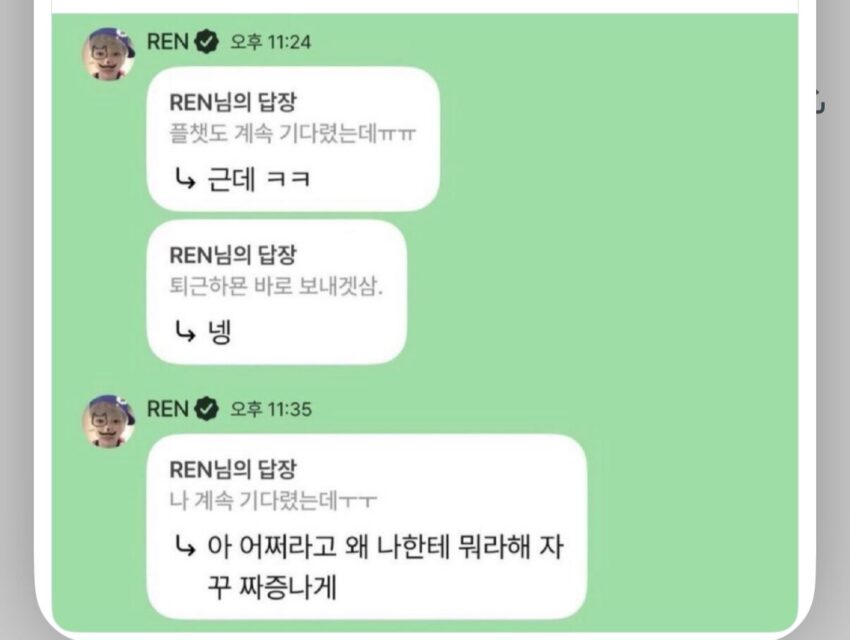
According to the report, the fan had said they kept waiting for Ren's 'plus chat' — a reference to the paid messaging feature used by many K-pop acts. Ren's replies, as quoted by Koreaboo, included 'So LOL' and a later message asking why the fan kept saying this, calling it 'so annoying.' The tone struck many as indifferent and rude, especially given the context of a paid fan service where idols are expected to engage warmly with supporters.
The backlash was immediate. Netizens began leaving critical comments under Ren's photos on the group's official account, a common form of protest in the K-pop fandom. The incident has since raised questions about idol-fan interactions, the responsibilities of agencies and the pressures faced by lesser-known idols. K-Beats Radio has not independently verified the messages, and we are relying on Koreaboo's report. The story remains developing, and no official response from Ren or his agency has been reported at the time of writing.
What Was Said: The Exchange in Detail
Koreaboo's report provides a short transcript of the exchange. A fan is said to have written, 'I kept waiting for your plus chat.' Ren allegedly replied, 'So LOL.' The fan then repeated, 'I kept waiting…' and Ren responded, 'So what? Why do you keep saying this to me…so annoying.' These lines form the core of the controversy. The exchange is brief, but its brevity only sharpened the impact: there was no follow-up apology or clarification in the reported messages.
The use of 'plus chat' suggests a feature on a fan messaging platform. While the exact platform is not named in the report, the term is consistent with paid subscription services where idols send messages to fans. The fan's persistence indicates they had been anticipating communication, perhaps during a scheduled window. Ren's replies, as reported, did not acknowledge the fan's anticipation with gratitude or apology. Instead, they appeared to treat the fan's devotion as an annoyance.
It is important to note that the messages were 'revealed online,' according to Koreaboo. This means screenshots or transcripts were shared, likely by the fan or a third party. The report does not specify how the messages became public. Nonetheless, the content alone was enough to trigger a significant reaction. The incident highlights how quickly private interactions can become public in the digital age, and how fans can use such leaks to hold idols accountable.
For nugu idols in particular, the speed at which a private moment can become a public controversy is a stark reminder of the risks involved in fan engagement.
Who Is CHASER's Ren and What Does 'Nugu' Mean?
CHASER is a K-pop group that falls under the 'nugu' category, a Korean slang term derived from the question '누구?' ), meaning 'who?' In K-pop vernacular, it refers to groups or idols who are relatively unknown or have not yet achieved mainstream recognition. The source headline explicitly labels Ren a 'nugu male idol,' which frames the incident within the context of lesser-known artists. The term is not necessarily an insult; it is a descriptor of industry status, but it carries a whiff of dismissal.
For nugu idols, every fan interaction can carry disproportionate weight. Unlike established stars who have large, loyal fanbases, rookie or nugu groups rely heavily on building a dedicated following. Fan messaging platforms are a key tool for this, offering a sense of intimacy and access. When an idol from such a group is perceived as ungrateful, the backlash can be especially damaging because the fanbase is smaller and more fragile. A single controversy can deter potential fans and cause existing ones to question their support.
The term 'nugu' itself can be used pejoratively, but it is also a neutral descriptor in industry discussions. It underscores the hierarchy within K-pop, where visibility and resources are unevenly distributed. Ren's situation illustrates the precarious position of nugu idols: they are expected to work harder to cultivate fans, yet they are also subject to the same intense scrutiny as top-tier stars. A single misstep can define their early career, and the pressure to be constantly grateful and engaging can be immense.
This context does not excuse rude behaviour, but it helps explain why the stakes feel so high for everyone involved.
The Fan Messaging Economy: Paid Intimacy and Its Expectations
Fan messaging platforms have become a cornerstone of K-pop's engagement economy. Services such as Plus Chat, Bubble and DearU allow fans to subscribe to receive messages from their favourite idols. These messages often mimic private conversations, with idols sharing casual updates, photos and replies. The appeal lies in the illusion of closeness, and fans pay monthly fees for the privilege. For many devotees, these messages are a primary way to feel connected to their favourite stars between comebacks and concerts.
The fan in this case referenced waiting for a 'plus chat,' suggesting they were expecting a message during a specific period. In these services, idols may send messages at scheduled times or spontaneously. Fans often anticipate these messages, and delays can be disappointing. The expectation is that idols will respond warmly, or at least politely, because the interaction is part of a paid service. When that expectation is unmet, the sense of betrayal can be amplified by the fact that money has changed hands.
When an idol responds dismissively, it can feel like a breach of an unspoken contract. Fans are not just consumers; they are emotional investors. The backlash against Ren reflects a broader tension in the fan messaging economy: the line between genuine interaction and commercial transaction. Idols are expected to perform gratitude and friendliness, even when they may be tired or overwhelmed. The incident raises questions about the sustainability of such demands.
It also invites scrutiny of the platforms themselves, which profit from fostering intense emotional bonds without always providing clear guidelines for handling the fallout when those bonds sour.
Why the Backlash Was So Fierce: Parasocial Bonds and Gratitude
Parasocial relationships — one-sided emotional connections with media figures — are a defining feature of K-pop fandom. Fans invest time, money and affection into idols, and in return they expect a degree of reciprocity, often in the form of gratitude, humility and kindness. Ren's alleged replies violated these expectations, making the backlash particularly intense. The fan's repeated 'I kept waiting' suggests a genuine emotional investment, and Ren's reported annoyance felt like a rejection of that investment.
In K-pop culture, idols are frequently reminded to be grateful to fans because fans are the reason for their success. This narrative is reinforced through awards show speeches, social media posts and fan meetings. When an idol appears to forget this, it can be seen as a betrayal. The fan's persistence also suggests they were not merely seeking attention but were expressing a legitimate feeling of anticipation. Ren's response, as reported, did not acknowledge that feeling.
Instead, it dismissed it, which is why the incident resonated so widely.
The incident also touches on power dynamics. Fans have limited direct access to idols, so paid messaging platforms offer a rare channel. When that channel is used to dismiss a fan, it can feel like a rejection of the fan's support. The backlash is therefore not just about rudeness; it is about the perceived violation of the fan-idol social contract. This is why reactions can be so swift and severe, even for a nugu idol.
The intensity of the response also reflects the broader trend of fans holding idols accountable in real time, using social media to organise criticism and demand apologies.
Netizen Reactions: Company Blame and Visual Criticism
Koreaboo highlighted two critical tweets that captured the mood. One netizen wrote that the company that gave 'this kind of person' a chance to become an idol should be punished more severely. This reaction shifts blame from the idol to the agency, suggesting that the real failure lies in the system that debuted someone unprepared or unsuitable. It is a common refrain in K-pop controversies: fans often see agencies as the ultimate gatekeepers, responsible for the quality and conduct of their artists.
Another comment focused on Ren's appearance and personality. The netizen asked if he became an idol 'with this face,' adding that if he lacks visuals, he should at least be kind. They also blamed the company for making such a person an idol. This tweet combines lookism with moral judgment, reflecting a common strain in K-pop criticism where physical attractiveness and personality are intertwined.
The comment implies that Ren has neither the looks nor the temperament for stardom, and that his agency made a poor decision.
These reactions are not isolated. In K-pop controversies, fans and netizens often target both the idol and the agency. The company is seen as responsible for training, image management and quality control. The idol is seen as the product. When the product fails, both are held accountable. The visual criticism, however, crosses into personal attack, raising ethical questions about how fans express dissatisfaction.
While criticism of an idol's behaviour may be legitimate, attacking their appearance can be seen as unnecessarily cruel and unrelated to the core issue of disrespectful communication.
Company Responsibility: Training, Image and the 'Nugu' Label
The first tweet's call for the company to be punished more severely than the idol reflects a widespread belief that agencies bear ultimate responsibility for their artists' behaviour. Agencies recruit, train and manage idols. They provide media training, personality coaching and image direction. If an idol behaves poorly, it can be seen as a failure of that training. Fans also recognise that agencies profit from fan interactions, so they expect agencies to ensure those interactions meet basic standards of courtesy.
For nugu groups, agencies may be smaller and less equipped to provide comprehensive training. The pressure to debut groups quickly and generate revenue can lead to shortcuts. Ren's case may highlight this dynamic, though the report does not specify which agency represents CHASER or what training was provided. It is worth noting that the agency's identity has not been disclosed in the source, so any analysis of its practices remains speculative.
What is clear is that the company's response — or lack thereof — will be closely watched by fans and industry observers alike.
The 'nugu' label also affects how the public perceives the incident. Some may argue that lesser-known idols deserve more leniency because they are still learning. Others may hold them to the same standards as established stars. The company's role in managing this balance is crucial. A well-handled response — such as an apology or a statement — could mitigate the damage. A poor response could exacerbate it, potentially turning a single incident into a lasting reputational problem.
In the past, agencies have sometimes issued apologies on behalf of their artists, but there is no guarantee that will happen here.
Visuals, Personality and Double Standards in K-pop
The second tweet's focus on Ren's face taps into K-pop's intense beauty standards. Idols are often evaluated first on their visuals, and those who do not meet conventional beauty ideals face additional pressure to compensate through talent, charm or personality. The comment suggests that if Ren lacks visual appeal, he has no excuse for being unkind. This logic is harsh and reductive, but it reflects a real dynamic in the industry, where appearance and likeability are often seen as interchangeable forms of capital.
Male idols have increasingly become subject to the same visual scrutiny that female idols have long endured. The comment 'if you don’t have the visuals, then at least have a good personality' implies that attractiveness and kindness are trade-offs. In reality, idols are expected to possess both. This double bind can be psychologically taxing, especially for those who are already struggling with public perception.
It also reveals a troubling assumption: that kindness is a consolation prize for those deemed physically unattractive, rather than a basic human expectation.
The incident also raises questions about double standards in fan criticism. Would a female idol receive the same comments about her face? Or would the criticism focus more on her attitude? While it is difficult to generalise, the K-pop industry has a long history of lookism and gendered expectations. Ren's case, as reported, shows that male idols are not immune to appearance-based attacks, even when the core issue is behaviour.
The mixing of visual and moral criticism muddies the debate and can distract from the legitimate concern about how idols treat fans.
What Happens Next for Ren and CHASER?
As of Koreaboo's report, there is no indication that Ren or his agency has issued a response. In similar cases, agencies often release a statement or the idol may apologise personally. The absence of a response can prolong the backlash, as fans wait for accountability. It is also possible that the agency is assessing the situation before acting. The timing and tone of any statement will be critical in determining whether the controversy subsides or escalates.
The incident could have lasting effects on CHASER's career. Nugu groups depend on fan goodwill, and a controversy can deter potential fans or cause existing ones to withdraw support. If the backlash continues, it may affect album sales, streaming numbers and future opportunities. However, some controversies fade quickly, especially if the idol shows remorse and the company handles it well. The group's next public appearance or release will be a test of how much damage has been done and whether fans are willing to forgive.
For Ren, the episode is a harsh lesson in the realities of K-pop stardom. Even a brief lapse in tone can be magnified online. Whether he can recover will depend on how he and his agency navigate the coming days. A sincere apology, if warranted, could go some way towards repairing the relationship with fans. A defensive or dismissive response could make matters worse. K-Beats Radio will continue to monitor the story as it develops, and listeners can stay informed by tuning into our coverage.
While reading, you can also listen to our live stream for the latest music and discussion.
The Bigger Picture: Fan Power, Cancel Culture and Industry Ethics
This incident is a microcosm of broader issues in K-pop: the power of fans to hold idols accountable, the ethics of paid intimacy, and the mental health challenges faced by artists under constant scrutiny. Fan messaging platforms are designed to foster connection, but they also create expectations that can be difficult to meet. When those expectations are broken, the fallout can be severe. The line between legitimate criticism and online harassment can easily blur, especially when thousands of fans react in unison.
The backlash against Ren also reflects a growing willingness among fans to criticise idols and agencies publicly. Social media has given fans a collective voice, and they can organise criticism quickly. While this can be a force for accountability, it can also lead to pile-ons and personal attacks. The visual insults directed at Ren are a reminder that online criticism can cross into harm.
As fans demand better behaviour from idols, there is an ongoing debate about what constitutes fair criticism and what amounts to bullying.
For the industry, the incident raises questions about how idols are trained and supported. Agencies may need to invest more in media training and mental health resources, especially for nugu groups. Fans, too, might reflect on their expectations and the human cost of their demands. Ultimately, the relationship between idols and fans is a two-way street, and incidents like this highlight the need for empathy on both sides. The K-pop ecosystem thrives on emotional connection, but that connection must be sustained by mutual respect.