Hwang Jung Eum answers a question about Kim Yong Jun
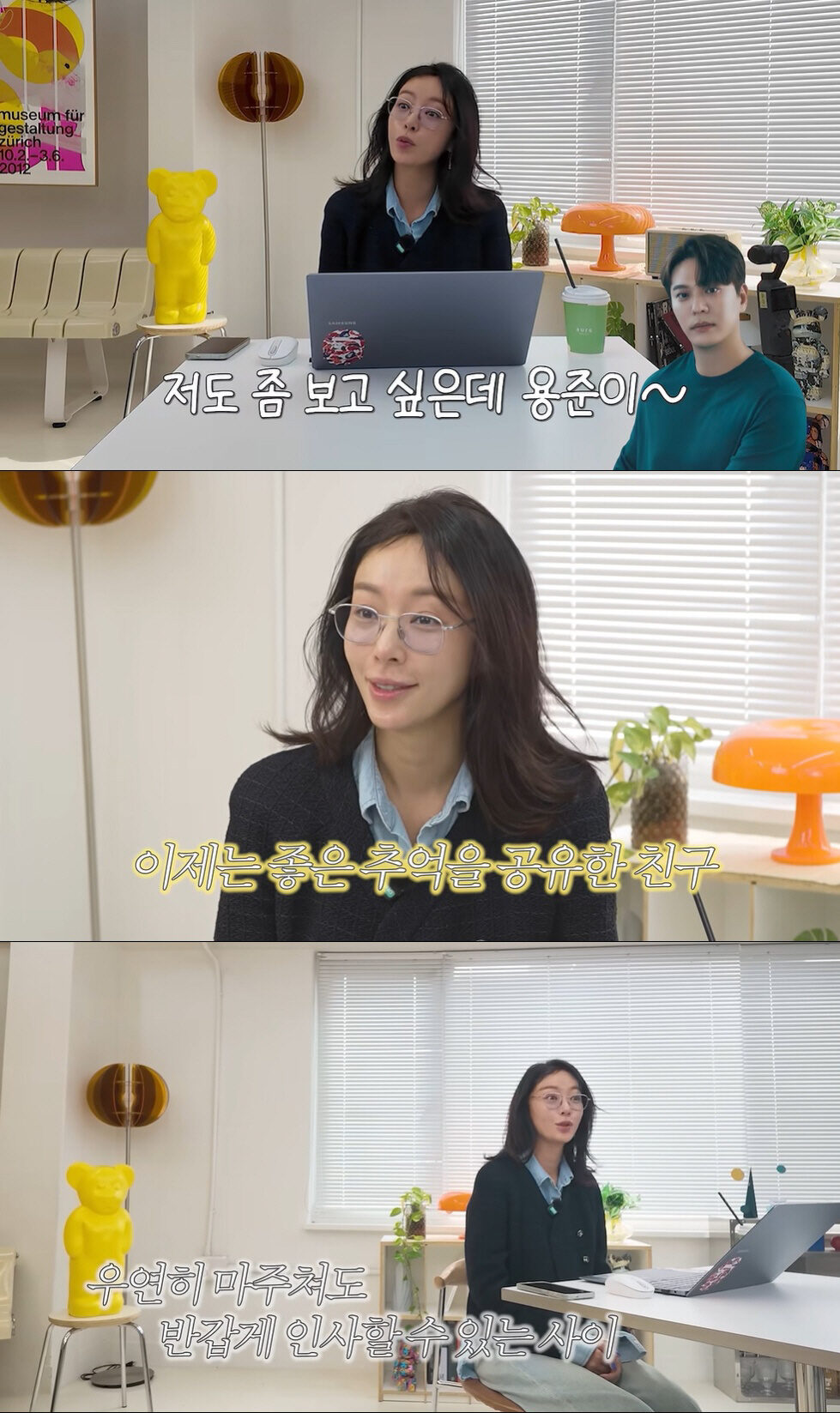
Actress Hwang Jung Eum has said she has never once crossed paths with her former partner Kim Yong Jun of SG Wannabe since the pair ended their relationship, in a short exchange that has become one of the week's more argued-about talking points in Korean entertainment. The remark came in a YouTube video titled The Day I Get Barraged with Questions, posted on 21 October, in which the actress took questions from viewers. Koreaboo reported the exchange, citing Naver.
Asked directly whether she had ever bumped into Yong Jun by chance since the breakup, Hwang answered without hesitation that it had not happened even once, adding that she does miss him a little. On a programme built around fielding whatever viewers send in, it was a brief, lightly handled answer to a passing question. Its afterlife online has been considerably larger than the moment itself, which is why it is worth looking at closely.
Nine years together, and a split the public watched closely
Hwang and Kim began dating publicly in 2006 and separated in 2015, closing a relationship that had lasted about nine years. That length alone would have made the breakup notable. What gave it a longer tail is that the couple had appeared together on MBC's We Got Married, allowing cameras and viewers into a relationship that was already real rather than staged for the programme.
Because the relationship had been presented to audiences in that format, the ending was treated as more than a private parting between two working entertainers. It became part of a shared timeline for people who had followed them. Nine years on, a single question about whether their paths had crossed since is not really a question about logistics. It is an invitation to revisit a story the audience already knows the ending of.
What Hwang actually said, and how she framed it
The reported quotes are worth separating from the reaction to them. Alongside the admission that she has not seen him since, Hwang described Yong Jun as a friend with many good memories, and said that if they met on the street they would greet each other warmly. The tone is deliberate: it places the relationship in the past as something resolved and fondly remembered rather than something unfinished.
The line about missing him a little is the one that travelled, but it sits inside a much more measured answer. Read as a whole, she is describing the ordinary residue of a long relationship — affection without expectation, and a stated willingness to be polite if chance ever put them in the same place. Anything beyond that reading is inference rather than reporting, and the exchange as described does not support it.
The response split along a familiar line
Reaction online divided sharply. Supporters welcomed the ease with which Hwang named her ex and described him warmly; as reported, one commenter said it was nicer to hear her say his name naturally and call him a good friend now, while another described those years as memories shared not only by the couple but by the people who watched at the time. For that group, the calmness of the answer was the point.
Critics took the opposite view. Reported comments questioned whether it was appropriate to bring up someone she has not encountered since, asked why she would mention a person who is doing well, and argued that from Kim Yong Jun's side it might not be pleasant to be spoken about. Both sets of comments are audience opinion gathered from Korean online discussion, not statements from either party, and they reveal more about how fans police public speech than about the two people involved.
Why one sentence about an ex travels so far
There is an asymmetry built into this kind of story. One person answers a question on camera; the other is absent, silent and unable to shape how the sentence lands. A name spoken once attaches itself to whatever the other person is doing now, and readers who encounter the coverage may meet Kim Yong Jun through the framing of an ex-boyfriend first and a member of the vocal group SG Wannabe second, whether or not that reflects how his own audience thinks of him.
It is also worth stating plainly that Kim Yong Jun has not been reported as responding, and that nothing in the reported exchange suggests anything more than a short reply to a viewer's question. The criticism directed at Hwang comes from commenters, not from him. Keeping that distinction clear matters, because the debate is not really about what either entertainer did; it is about what audiences think should be said out loud.
The same tension runs through much of the public scrutiny of celebrity relationships, where a passing remark can be read as a statement of intent.
There is a practical reason the remark carried: it was answerable. Had Hwang deflected, the clip would have been unremarkable. By answering warmly and without visible discomfort, she supplied a quotable moment, and quotable moments are what short-form entertainment coverage runs on.
The long shadow of a televised relationship
We Got Married is the reason this particular ex is not simply a name in a biography. Programmes that invite viewers into a relationship create a sense of shared ownership over its milestones, and that investment does not end when the relationship does. The supporter comment about memories belonging to the audience as well as the couple captures the mechanism precisely: for a segment of viewers, Hwang and Kim's years together are part of their own viewing history.
That is why the question about bumping into him was asked at all, and why it drew an audience. It is a way of checking in on a story that was once public property. Hwang's answer — no meetings, but no bitterness either — is arguably the most ordinary possible outcome for two people who dated for nine years and then moved on, which is perhaps what made it feel worth discussing.
Where the conversation leaves the question of courtesy
Nothing in the reporting suggests a dispute between the two people involved. There has been no reported escalation, no rebuttal, no follow-up from Kim Yong Jun's side. What exists is a brief answer on a YouTube show and a divided comment section, and the debate is best understood as a disagreement about etiquette rather than about conduct: whether a former partner's name belongs in casual public conversation years after a relationship ends, and who gets to decide.
Hwang's own framing offered one answer — friend, good memories, a warm greeting if chance allowed. Her critics offered another. Both are arguments about how much consideration a former partner is owed when he is not in the room. The takeaway is modest but useful: this is a story about tone and public manners, not about a relationship being reopened.
Fans who want to follow how Korean entertainment discourse handles these moments can keep an eye on our K-Beats chart and schedule for what else is driving conversation this week.