
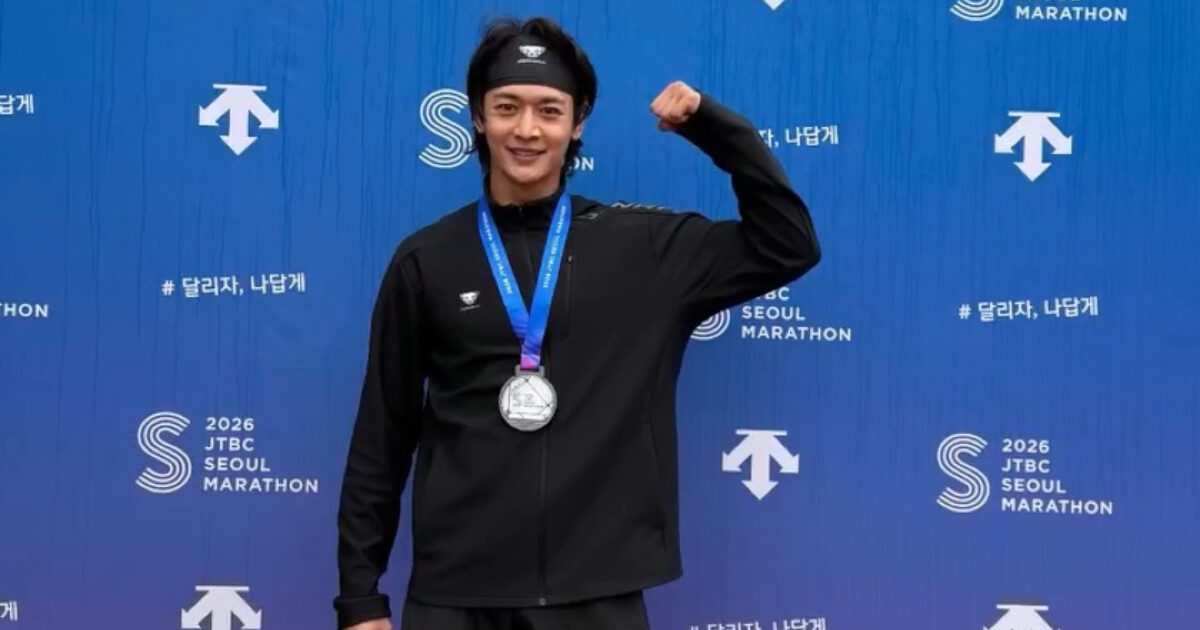
Minho's marathon result withdrawn as committee complaint lands
The Korean Sport & Olympic Committee has received a complaint asking it to review SHINee's Minho's role as a public relations ambassador, Koreaboo reported on 4 November. The complaint follows his apology for receiving physical help during the 2026 JTBC Seoul Marathon and his decision to return his finishing record.
It asks the committee to consider whether Minho should continue ambassador activities, to verify how the marathon organising committee applied race rules and processed the record, and to confirm the basis for assigning him to Group B. The committee says it plans to assign a person in charge and investigate the related matters.
The development gives the story a second stage. What began as a dispute over footage from the course now involves the sports body that appointed Minho, the organiser that handled his result and the race category he was placed in. Those are separate questions with separate decision-makers. The complaint does not automatically mean Minho has lost the ambassador role or that the marathon organiser acted improperly; it asks for a review, and the committee has not announced an outcome.
Even so, the fact that the complaint reaches the committee shows how quickly a celebrity race result can become a governance issue.
What happened at the Seoul Marathon
Minho attended the Seoul Marathon on 1 November and was challenging a full marathon for the first time in his life. He crossed the finish line in 3 hours, 0 minutes and 18 seconds. The time drew attention because it missed the sub-three-hour completion mark by just 18 seconds. For a first full marathon, the near-miss was always likely to attract comment.
The controversy began after a video circulated online showing a person, presumed to be a pacemaker running alongside Minho, placing a hand on his back and waist as if pushing him forward.
Questions followed about whether that amounted to a violation of race rules. The source identifies the person only as presumed to be a pacemaker, and the exact sequence of events has not been set out in full here. What matters for the complaint is that the footage turned a discussion about a fast debut into a discussion about assistance, fair running and how a result should be handled when questions are raised. That shift is why the case now involves more than Minho's time.
Minho's apology and the returned result
Minho apologised directly on social media on 3 November. The next day, he voluntarily returned his finishing record to the event organiser. The organiser accepted his intention and decided not to provide official results for the race. That sequence is important because it distinguishes between a public apology and a formal outcome. By returning the record, Minho removed the result from official consideration rather than leaving it to be disputed while the footage circulated.
The apology also changed the tone of the story. A celebrity runner apologising and giving up a record can be read as taking responsibility, but it does not answer every procedural question. The complaint before the Korean Sport & Olympic Committee asks about the application of race rules and the handling of the record by the organising committee, not only about Minho's personal response. That is why the returned result did not end the wider discussion.
Why the complaint goes beyond the race
The complaint sets out three areas for the committee to examine. It asks whether it is appropriate for Minho to continue his ambassador activities. It asks the committee to verify the application of race rules and record processing by the 2026 JTBC Seoul Marathon organising committee. It also asks the committee to confirm the basis for assigning Minho to Group B. Each point has a different focus: the first is about a public role, the second about event procedure, and the third about race administration.
Keeping those strands separate matters. A finding on one would not automatically settle the others. The committee's stated plan is to assign a person in charge and investigate the related matters. That is a procedural step, not a verdict. For readers, the useful question is not simply whether Minho should remain an ambassador, but whether the organisers can explain how the race rules were applied and how the result was processed.
The complaint puts both the public-facing role and the behind-the-scenes process in the same frame.
The ambassador role and public expectations
Minho was appointed an ambassador for the Korean Sport & Olympic Committee in September last year. At the time, the committee said he would take part in promotional activities aimed at revitalising everyday sports and conveying sports policy messages. That makes the ambassador question more than a celebrity endorsement story. The role is tied to public communication about sport, and the person chosen for it is expected to represent the body's aims in public settings.
When a controversy involves a race result, the review naturally asks whether the ambassador can still carry that public message. This is an interpretive point rather than a finding. The complaint asks for a review; it does not establish misconduct in the ambassador role. But the committee cannot separate the question entirely from the race, because the complaint links Minho's public position to the circumstances around his run. The outcome will therefore be watched by people interested in both SHINee and Korean sport.
Group B and the rules under review
The Group B element is the most technical part of the complaint. The source does not set out the criteria used for Group B or the specific rule that may have been at issue. What is clear is that the complainant wants the basis for that assignment confirmed, alongside the application of race rules and the handling of the record. Race categories and pacing arrangements can look like internal administration, but they affect how a result is understood and compared.
For a marathon, rules on assistance and record procedures are part of what makes a finish meaningful. If those processes are questioned, a general statement that the race was run in good faith may not be enough. The complaint asks for specific verification. That does not mean the questions will produce a finding against anyone. It means the committee has been asked to look at the paperwork and the rules as well as the footage.
What happens next
The practical significance is twofold. For Minho, the returned record closes one part of the race result, but it does not settle the ambassador review. For the Korean Sport & Olympic Committee, the complaint creates a test of how it handles a high-profile case involving someone it appointed. The marathon organiser also has an interest in explaining how the race was run and how the result was processed.
Those answers are not yet available, and the committee has not announced a timeline in the source reporting.
The next step will show what kind of review this becomes. It could clarify the rule application and the record process, or it could lead to a closer look at the ambassador arrangement. It could also confirm that no further action is needed, though the complaint itself shows that some people want the questions answered formally. The important point is that the case is now being handled through an institutional process rather than only through social media reaction.
The takeaway
The takeaway is that Minho's marathon story has moved from a near-sub-three finish to a question about rules, records and public roles. The apology and the returned result addressed the immediate controversy, but the complaint keeps attention on process. How the Korean Sport & Olympic Committee handles the review will matter as much as the original footage. For readers following SHINee or Korean athletics, the committee's next step is the detail to watch.