A creative director steps away months into TUIDE's career
Kim Soyeon, the main creative director of the rookie girl group TUIDE and of ABD, the new HYBE sub-label behind them, announced on 25 October that she had left her role after two years with the label. Koreaboo reported the announcement, which was made on her own social media rather than through a company statement.
The timing is what gives the news weight. TUIDE are still in the earliest phase of a career, the period in which a group's visual world, styling language and overall concept tend to be set. A creative director leaving at that point is not automatically damaging, but it raises a practical question that fans of any new group would ask: who now holds the thread of the idea, and does it stay where it was?
Kim's own post, as reported, focused on the work rather than the exit. She wrote about the stress involved in putting together the group's creative vision and stressed that she had been able to do it because of her team. The reason for her departure has not been made public.
What the announcement said, and what it left open
It is worth separating the two halves of the story cleanly. On one side is a confirmed, dated fact: a creative director with responsibility for a newly launched HYBE sub-label and its first girl group has announced she is moving on. On the other is everything readers most want to know, which is why.
Koreaboo's report is explicit that the real reason remains unknown, and nothing in Kim's statement as described supplies one. She spoke about the difficulty of the creative work and about the people who helped her do it. That is a fairly common register for a departure post, and it does not confirm any of the explanations circulating in reply threads.
For listeners following TUIDE, that gap is the story's defining feature. A departure with a public explanation reads differently from a departure without one, and the second kind tends to be filled in by the loudest available theory.
Why NewJeans entered the conversation so fast
Within hours, replies to coverage of the announcement were framing the news through NewJeans. Some posts used the phrase "NewJeans 2.0", others treated the departure as a kind of parallel to the long-running public friction around NewJeans and their management, and others simply expressed hope that the situation would resolve in the senior group's favour.
That reflex says as much about how fans read HYBE's groups as it does about TUIDE. NewJeans are among the acts most closely associated with a single, instantly recognisable creative identity, and that association has made their name a shorthand whenever a label's creative leadership becomes a talking point. The comparison is a pattern fans perceive, not a documented link between the two situations, and the two groups sit under different labels within the same wider company structure.
For NewJeans, K-Beats maintains a profile page collecting our coverage. For TUIDE, the relevant context is much shorter, which is precisely why a change at the top of their creative team lands so heavily.
Chart performance and creative freedom: the two theories doing the rounds
The speculation clustered into two camps. One held that TUIDE's recent comeback had underperformed and that Kim had walked away from a project that was not landing. The other held that HYBE had constrained her originality and that she had refused to compromise. Neither theory has been substantiated, and both were posted by fans reasoning from the outside.
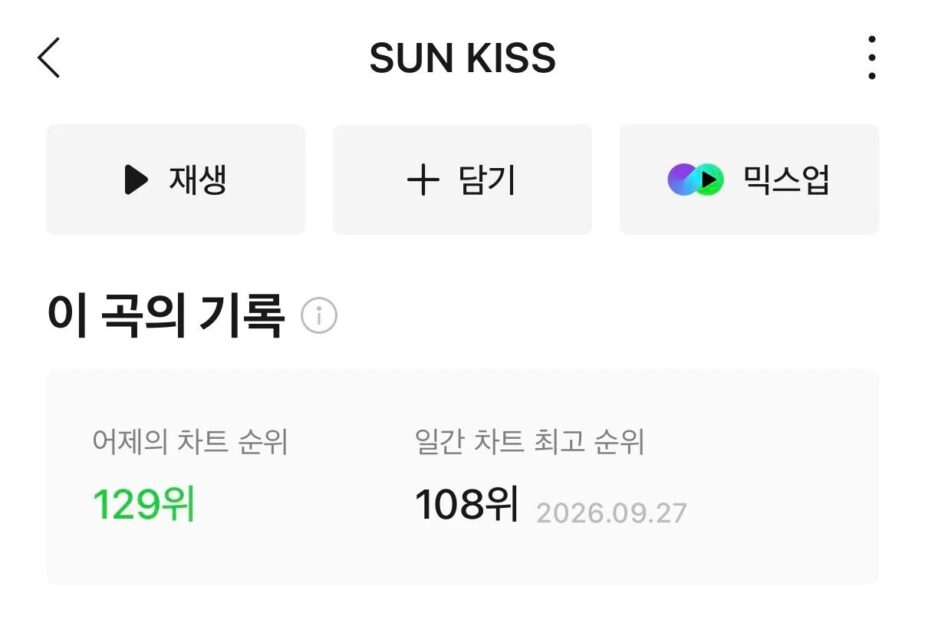
There is some real context behind the first. TUIDE debuted in August with the EP Tune & Play and lead single "Sun Kiss", and the song did not enter Melon's top 100, sitting at No. 108 in the chart snapshot K-Beats reported at the time. A debut that misses the top tier is unremarkable for a new group, but it does give fans a number to point at when they are looking for a reason.
The second theory is harder to evidence at all. Judgements about whether a creative director was being steered or supported require information that has not been shared publicly, and Korean pop labels rarely publish that kind of detail. Treating either explanation as established would go beyond what is known.
The TWS comparison offers a quieter precedent
Not every reply reached for drama. Several fans pointed to TWS, another group under the HYBE umbrella, noting that their creative director also left early in their career and that the group's concept shifted gradually rather than being overhauled. In that telling, a departure is a normal stage in a rookie group's development rather than a rupture.
That reading is a fan reconstruction of events, not an official account of how TWS were managed, but it is a useful counterweight to the more alarmist posts. It also identifies the thing fans actually care about: continuity. What worries people is not the personnel change itself, so much as the possibility that a concept they have only just met will be replaced before it has had room to grow.
Several replies made exactly that point about TUIDE, expressing hope that the group's sound and styling would survive the transition. It is a reasonable thing to want, and it is also something listeners will be able to judge only when new material arrives.
What creative direction covers in practice
For readers less familiar with the role, a creative director at a K-pop label typically sits across concept development, visual identity, styling references, artwork and the overall narrative that ties a release together. The job is collaborative by nature, which is why Kim's emphasis on her team matters: the work is rarely one person's alone, even when one person is credited with the vision.
That collaboration is also why predictions of an immediate aesthetic U-turn are premature. Concepts are built by teams, and a group that has already established a look does not typically discard it wholesale. Equally, a change at the top is not nothing. The decisions that shape a comeback's feel tend to flow through whoever holds the creative lead, and a new appointment can shift emphasis even when the broad direction holds.
Both of those things can be true at once, and the honest answer at this stage is that the effect on TUIDE's music is not yet knowable.
What to watch when TUIDE return
The clearest signals will come with the group's next release rather than with further social media posts. Three things are worth noting: whether ABD names a successor as creative lead, whether the credits on artwork and visual production change substantially, and whether the group's next single extends the "Sun Kiss" era or marks a deliberate reset.
A label statement would help. Silence is not evidence of trouble, but in a fandom already primed by the NewJeans comparison, an unexplained gap invites the most dramatic available reading. Companies in this position often say nothing at all, which is why fan speculation tends to outrun the facts so quickly.
For now, the most defensible summary is modest. A respected creative lead has left a young label and its rookie group on her own terms as described, without stating why. Fans have responded by mapping the news onto a larger story they were already following. Whether the two stories really connect will be settled by TUIDE's next chapter, not by the replies.
The takeaway
Kim Soyeon's departure is a genuine piece of news for anyone following TUIDE, and it is also a case study in how quickly a confirmed fact can be surrounded by unconfirmed explanation. The fact is the exit. The theories are the noise around it.
What remains within reach for listeners is the work: the songs, the styling, the visual choices, and whether the group that emerged in August still sounds like itself in six months' time. That is a more interesting question than any of the guesses, and it is one that only the next release can answer.