
Chaeryeong puts Girls' Generation at the start of the story
ITZY's Chaeryeong has credited Girls' Generation with setting her on the path to becoming an idol. She made the comment during a conversation with Sung Si Kyung on the YouTube variety show Sung Si Kyung's Eating Show, in a video shared on 18 November, as reported by Koreaboo. The timing gives the anecdote extra weight: Chaeryeong is currently promoting her solo debut album, Lovesick, so the interview offers a look at the experiences that came before both her group debut and this new solo chapter.
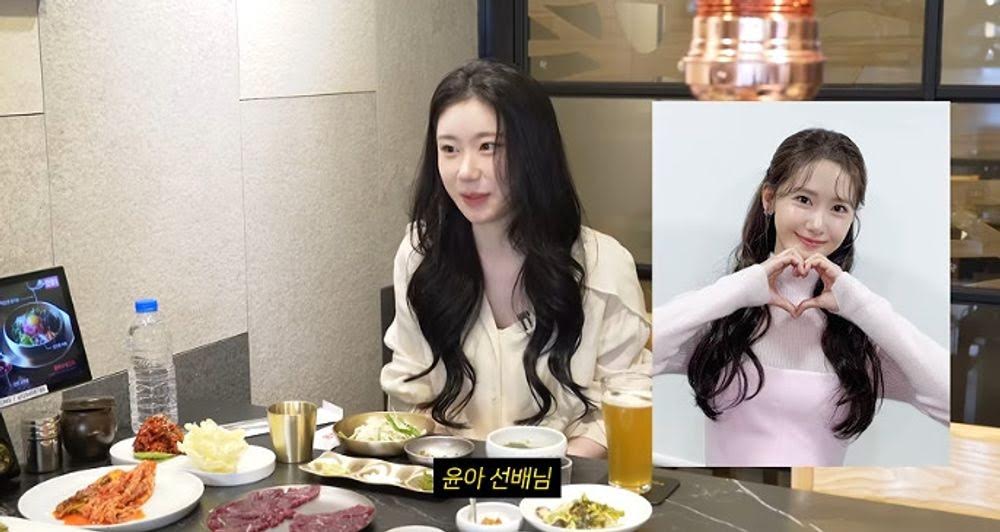
Asked what made her think she wanted to be an idol when she was young, Chaeryeong said she dreamed of it after watching Girls' Generation and loved copying their dance moves. She named Yoona as her favourite member. It is a straightforward answer, but it places a second-generation girl group at the centre of a younger performer's formative years.
For anyone who has watched Chaeryeong on stage with ITZY, the detail explains the style of performance she was drawn to as a child, rather than adding a new claim about her training.
The remark also shows how inspiration travels across generations in K-pop. A group that defined one era becomes the reference point for a performer who would later debut in another. Chaeryeong does not present the influence as a calculated career plan. She describes it as the starting point of a wish, which is a quieter and more specific origin than a single audition story.
A school performance turned admiration into ambition
Girls' Generation was not Chaeryeong's only early reference. She said that, besides Girls' Generation, she liked all idol girl groups back then, naming KARA and Wonder Girls among the seniors she followed. That wider frame matters. Her childhood fandom was not fixed on one act but on a whole period of girl-group performance, which helps explain why the memory is tied to dancing rather than to a single song or member.
The decisive moment, as she described it, came at a school performance. After dancing there, she thought, 'I want to be a singer.' That sentence moves the story from admiration to ambition. It also explains what followed: from then on, she and her sister went to auditions together. The sequence is ordinary in K-pop terms, but it is specific to her. First came the performances she watched, then a live school event, then the audition circuit.
That progression is worth noting because it runs against the idea that idol aspirations begin with a single television moment. Chaeryeong's account gives weight to the everyday settings in which a career idea can form: a school stage, a dance copied from a senior group, a sibling who shares the same interest. None of those details is dramatic on its own, but together they explain how a young fan becomes a trainee.
K-Pop Star, elimination and the next-morning call
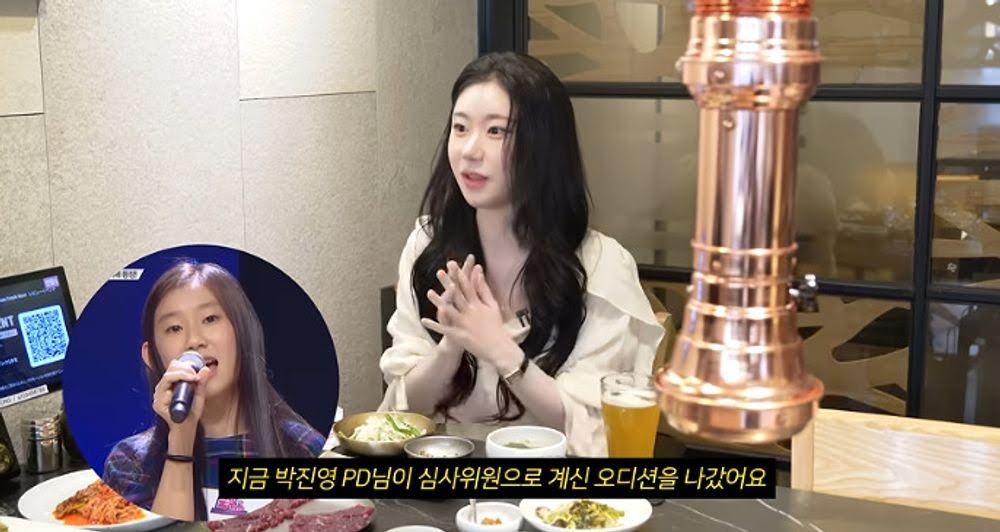
Chaeryeong also recalled going on the audition programme K-Pop Star, where the JYP producer Park Jin Young was a judge. After she was eliminated, she said she received a casting call from JYP 'the next morning at 11 a.m.' to become a trainee. She had auditioned at 13, trained at JYP and later debuted with ITZY. The source does not specify which K-Pop Star season or the exact audition date, so the timeline rests on her recollection.
The detail is the kind of turning point that television audition narratives often compress. Here the order is clear: a televised competition, an elimination, then a company approach almost immediately afterwards. Her account suggests that the exposure of the programme mattered beyond the result. A contestant can leave a show and still be seen by the industry, even if the edit or the final ranking does not follow the story they wanted.
For readers, the practical point is not that every eliminated contestant receives a call. It is that audition programmes function as a visible route into the industry, and visibility can outlast a single result. Chaeryeong's story is one example of that route working in an unexpected order. She did not describe the call as a consolation prize. She described it as the moment she was asked to become a trainee, which is the step that actually began her professional training.

What the JYP call meant for a 13-year-old trainee
The casting call did not make Chaeryeong an idol on its own. She entered JYP as a trainee at 13 and trained there before debuting with ITZY. The source does not describe how long that training lasted or what it involved, but the basic arc is clear enough: the call opened a door, and the years that followed were a separate stage of preparation.
That distinction is useful when reading stories about scouting and casting. A company's interest can sound like the decisive event, especially when it arrives the morning after a televised elimination. In practice, it is the beginning of a longer process. Chaeryeong's account places the call near the start of her career, not at its conclusion. The work of becoming a trainee, and later a member of a group, sits between that morning and her debut.
Her recollection also gives a human scale to a system that is often described in abstractions. A 13-year-old received a call, accepted a trainee offer and then spent years preparing. The story does not need to be exceptional to be revealing. It shows how quickly a young person's path can change, and how much follow-through is required after the initial opportunity.
Chaeyeon and the sibling support behind the auditions
Chaeryeong's sister Chaeyeon appears in the story as more than a family detail. Asked whether the two motivate and support each other, Chaeryeong said they are 'each other's biggest supporters'. She said she always tells her sister that she hopes she becomes more successful than her, and that Chaeyeon says the same to her. They cheer for each other's success.
The sisters went to auditions together after the school-performance moment. That shared experience helps explain the environment in which Chaeryeong's ambition formed. A sibling with the same goal can make the audition circuit less solitary, and it can make success feel less like a zero-sum competition within the family. Chaeryeong's wording is generous in both directions: she wants her sister to do well, and she says the feeling is returned.
This part of the interview will resonate with anyone who has pursued a competitive goal alongside a sibling or close friend. The story is not only about a famous inspiration or a lucky call. It is also about the people who go to the same auditions, wait for the same results and keep encouraging one another afterwards. That context makes the early part of Chaeryeong's career feel less like a solo sprint.
Why the story matters in her solo era
Chaeryeong recently released her solo debut album, Lovesick, and is actively promoting it. A solo release changes the frame around an idol. The audience is asked to see her outside ITZY's group dynamic, with her own material and her own promotional schedule. Her origin story gives that shift a longer backstory. The Girls' Generation fandom, the school performance and the JYP call are not new events, but they help explain the performer now presenting solo work.
The interview also arrives at a useful moment for fans who know Chaeryeong mainly through ITZY's group releases. It adds detail to the period before the group existed, when she was a young trainee with a sister and a shared audition routine. That background does not determine what Lovesick sounds like, and it would be wrong to draw a straight line from a childhood influence to a finished solo album.
But it does show continuity in how she describes her own path: inspiration first, then effort, then a series of auditions and training stages.
For K-Beats readers, the practical significance is that a solo debut often brings more interviews and more reflection on a performer's early years. Chaeryeong's appearance on Sung Si Kyung's Eating Show is one of those reflective moments. It gives context to the solo era without turning the album into a footnote to her biography.
The audition-show route, without the trophy
Her account is a useful counterpoint to the winner-takes-all framing of television auditions. Chaeryeong did not describe winning K-Pop Star. She described being eliminated and then receiving a JYP call the next morning. The story shows that industry attention can follow a visible performance even when the contest result goes the other way. That is not a guarantee for every contestant, and it should not be read as one. It is one person's recollection of how her own route developed.
The detail also clarifies the relationship between audition programmes and company scouting. A show can put a young performer in front of judges and viewers, and a company can act on what it sees. Chaeryeong's timeline is unusually quick, but the underlying logic is familiar: exposure, evaluation and an offer.
The source does not give the terms of the offer or the number of other trainees involved, so the story should be read as a personal anecdote rather than a full account of JYP's casting process.
What remains clear is that the televised result did not close the door. For readers who follow audition programmes, that is the most transferable part of the story. Elimination is a result within a format, not a verdict on a career. Chaeryeong's later debut with ITZY is the evidence she offers for that point.
The takeaway: inspiration, then the work
Chaeryeong's story is not only about a famous senior group. It is about what happened after the inspiration: dancing at a school performance, going to auditions with her sister, appearing on K-Pop Star, being eliminated and then accepting a trainee offer from JYP. The order matters because it shows that the early spark was followed by a series of practical steps, each with its own uncertainty.
Now, with Lovesick out and promotion under way, that early Girls' Generation fandom sits at the start of a solo chapter rather than at the end of a debut story. The interview adds a human detail to a career that fans usually see in finished performances. It also leaves a clear takeaway: a childhood influence can start a career, but the route is made of auditions, training and the people who support the person along the way.

