
Empty blocks become the story at ILLIT's Seoul encore shows
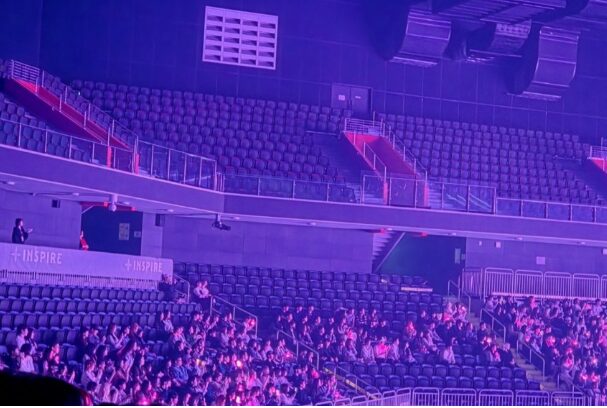
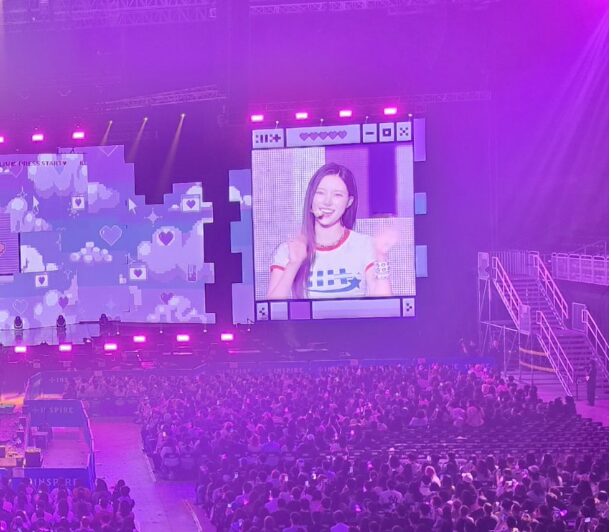
ILLIT's two encore concerts in Seoul on 17 and 18 October were billed as a chance for fans to see the members perform live. In the days afterwards, the images that travelled furthest were not of the staging but of the seating, as Koreaboo reported on 18 October.
In photographs shared across social media, blocks of unoccupied seats were visible towards the outer corners of the floor areas and on the upper levels of the venue, leaving gaps that read starkly against the lit stage. For a group whose debut was one of the most closely watched of 2024, the pictures quickly became a talking point in their own right.
The conversation that followed centred on ticket sales and the size of ILLIT's domestic concert audience. Social media users framed the images as evidence of softer demand than expected, with one widely shared post describing the scene as legendarily empty. That characterisation is a fan's description of a photograph, not an attendance figure, and no official capacity or sales number appears in the reporting.
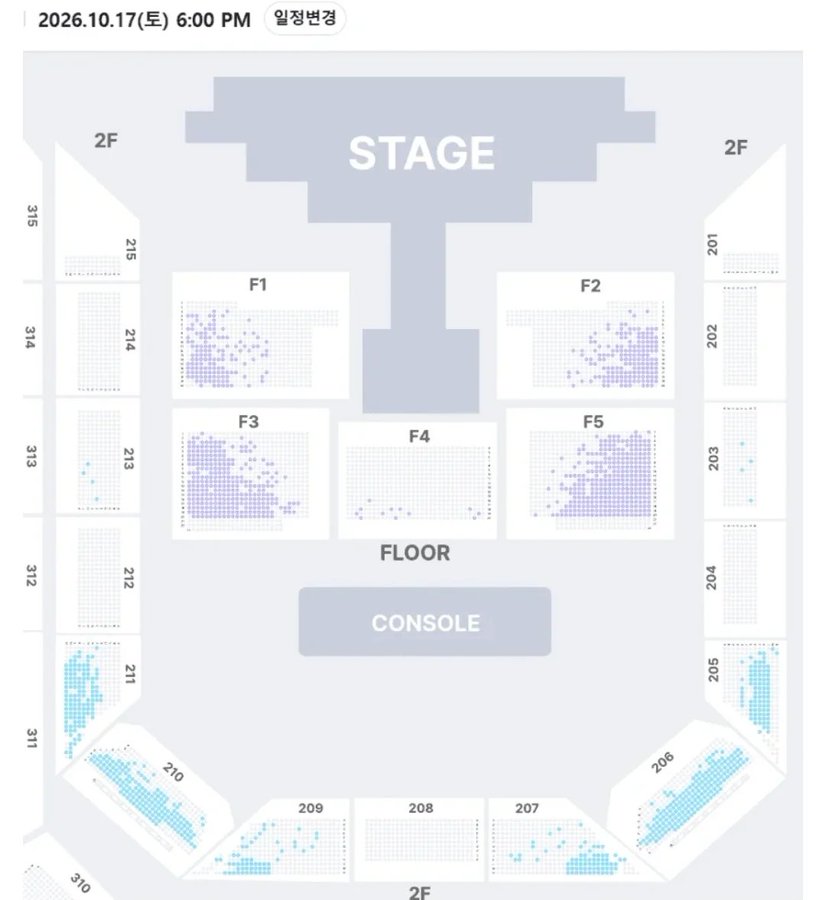
What is documented is narrower and more concrete: photographs taken at the shows, and a reservation page screenshot a netizen dated 15 October. Everything beyond that, including what the empty rows mean for the group's standing, remains contested interpretation.
A reservation screenshot and free floor upgrades
The detail that gave the photographs a second life was a screenshot said to come from a booking page and dated 15 October, two days before the first show. According to the reporting, it showed more seats becoming available as the concert date approached because of cancellations, with a substantial share of floor seating still open.
The report also states that the team announced free upgrades to better floor sections. That kind of move is familiar in live music: it can fill sparse areas, improve the look of a room from the stage and give ticketholders a better view. Read alongside the photographs, it is the element of the story that is hardest to attribute purely to camera angles or unlucky timing.
Still, upgrades and late cancellations are ordinary features of concert week. Seats released back into a system close to showtime, and sections reshuffled to concentrate an audience, happen across the industry. What makes this case notable is the combination: an image of scattered seating, a booking page that appeared to show availability, and a promotional gesture that suggests organisers were aware of the shape of the room.
None of that establishes how many people walked through the doors across the two nights. It establishes that the visual impression of an under-filled venue was reinforced, rather than contradicted, by other details circulating online.
Why the scrutiny is sharper for a HYBE-signed group
ILLIT debuted in March 2024 under BELIFT LAB, a subsidiary of HYBE, and found commercial success quickly with the debut single Magnetic. That combination of a major label lineage and an immediate hit raises expectations, and expectations are what turn an empty row into a headline.
For a group launched with that level of industry weight behind it, a concert is read as a public measurement. Streaming numbers and chart placements are aggregated and abstract; a photograph of a half-empty upper tier is neither. It offers observers something that feels like a direct look at a fandom's willingness to pay, travel and give up an evening.
That is why the discussion moved so quickly from what the images showed to what they supposedly proved about domestic popularity. The written framing around the story online, including the question of whether the group had overestimated their pull, is a question posed by commenters rather than a finding. It is worth keeping that distinction in view, because the leap from visible seating to a verdict on a career is a large one made on thin evidence.
It is also worth remembering how fast the wider context shifts. A group can play to modest rooms in one market and sell out elsewhere, and the balance between the two is rarely visible in a single weekend of photographs.
How K-pop fandom learned to count seats
Seat-counting has become a routine part of K-pop fandom. Fans monitoring a booking page, tracking which sections open and close, and comparing screenshots across the run-up to a show have turned ticket availability into a form of live commentary. Cancellations become visible data points; an upgrade notice becomes a signal.
This habit has real uses. It can flag genuine soft demand, and it can equally mislead. Availability pages show what is unsold at a moment in time, not who eventually attends. Blocks held for production, for guest lists or for later release can look identical to unsold inventory. Photographs catch one second of one night, and a section that looks deserted at the start of a set can fill before the encore.
The wise reading sits between dismissal and certainty. The images and the booking-page screenshot together suggest that parts of the venue were not full, particularly on the floor and in the upper levels. They do not, on their own, tell us how the two nights compared with each other, how the room felt to the people in it, or how the shows were received by those who did attend.
What the episode does show is how quickly a visual impression can outrun the numbers behind it, and how much interpretive weight a single photograph can be asked to carry.
Digital success and a live draw are different currencies
The gap between a song's reach online and a group's ability to fill a venue is one of the more persistent tensions in contemporary pop. A track that spreads widely can accumulate listeners far beyond the people who would buy a ticket, and the two audiences are not interchangeable. Streaming is cheap, frictionless and often incidental; a concert ticket involves money, travel, annual leave and a decision made weeks or months in advance.
For a group that arrived with a hit single and a major-label launch, the early audience is broad before it is deep. Depth is built over time, through repeat releases, touring, and the slow accumulation of fans for whom a live date is a fixture rather than an optional extra. Encore shows in Seoul are often where that depth is tested first, because they ask the domestic audience to show up after the promotional cycle has already peaked.
This is interpretive territory rather than a claim about ILLIT specifically. What can be said with confidence is that live turnout is a lagging indicator: it reflects a fanbase that already exists, rather than one a group might be about to build. A soft night is not a permanent condition, and a full one is not a guarantee of the next.
The most useful question is not whether ILLIT overestimated anything, but what a company does with the information once it has it. Room configuration, pricing, city choice and the pace of touring all shape the picture as much as demand does.
What an encore show is actually for
In K-pop, an encore concert carries a particular set of expectations. It usually arrives after a run of activity rather than at the start of one, and it functions partly as a gathering for the committed: the fans who will come back, who know the B-sides, who want to see the group in a room rather than on a broadcast.
That makes the encore a strange venue for a referendum on popularity. The audience is narrower by design, and the staging is often built around intimacy rather than spectacle. A photograph taken in the upper tier of an encore show is therefore not a neutral test of a group's reach, even if it is treated as one online.
At the same time, encore dates are not charity events. They are ticketed, promoted and priced, and their turnout matters commercially. Venues are booked on projections, and the gap between a projection and a room is precisely what people were looking at in those images.
The reasonable conclusion sits in that gap: an encore that looks thin in photographs is a genuine data point about the domestic market, worth noting, and not by itself a diagnosis of a group in trouble.
The takeaway: photographs invite a verdict, numbers are what decide it
ILLIT's weekend in Seoul produced a clear, documented set of facts: two encore concerts on 17 and 18 October, photographs showing unoccupied sections on the floor edges and upper levels, a booking-page screenshot dated 15 October showing remaining floor seats as cancellations came through, and a free upgrade offer to better floor sections. Around those facts sits a large volume of interpretation about what they mean for the group's standing.
The honest reading is that the images show what a section of the venue looked like, and that the booking and upgrade details suggest organisers were working with a room that had space in it. Whether that reflects demand for these particular dates, the effect of pricing and configuration, or something broader about ILLIT's domestic audience is not settled by a weekend of pictures.
For readers, the practical question is how to weigh visual evidence in a fandom culture that has become very good at gathering it and sometimes too quick to conclude from it. Watching the next set of dates, the shape of the room and the way the group's team responds will say more than a single viral screenshot can. The story is worth following as a case study in how live turnout is measured, debated and sometimes misread.