ILLIT’s police concept lands in controversy
ILLIT’s new comeback concept has moved quickly from teaser imagery to a live debate about how K-pop styles uniforms. Koreaboo reported in a story dated 18 October 2026 that the girl group’s police-inspired outfits for the song You’re Under Arrest drew criticism from Korean netizens, with many directing their anger at HYBE and the creative team rather than at the members themselves. The complaint is not simply that the group is wearing costumes.
It is that the specific design turns the working uniform of female police officers into a sexualised look, and that the imagery will be repeated across music shows, promotional clips and social media challenges.
That matters beyond one comeback. Uniform concepts are familiar in K-pop performance styling, and they often rely on exaggeration, role-play and a wink at the audience. But when the uniform belongs to a real profession, especially one associated with authority and public service, the styling can collide with real-world debates about gender, respect and representation.
The early reaction reported by Koreaboo suggests that this collision is exactly what has happened here: a pop concept designed to be eye-catching is being read by some Korean netizens as a statement about women in law enforcement.
What the outfits actually include
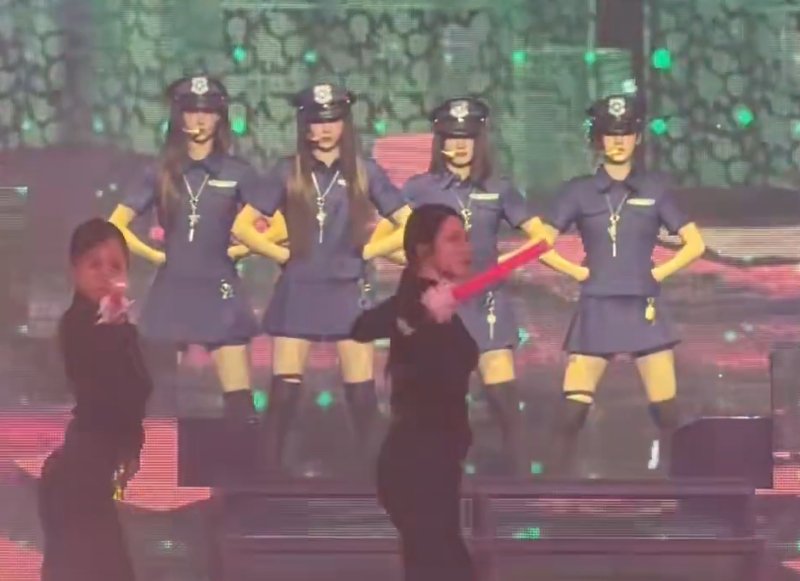
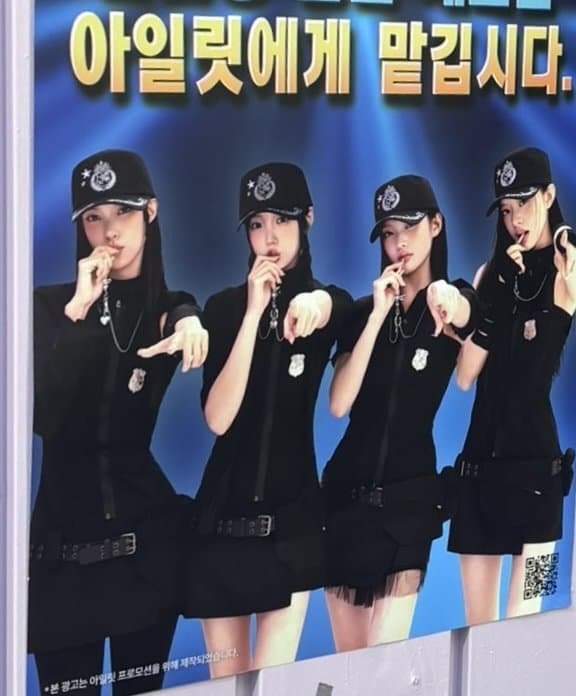
According to Koreaboo, ILLIT’s concept features stylised police uniforms rather than traditional police attire. The reported elements include short skirts, tight tops, knee-high socks and garter-style details, producing what the report describes as a distinctly feminine interpretation of law enforcement uniforms. One critic quoted by Koreaboo singled out a sleeveless top, knee-high socks, a miniskirt and a cinched waist, arguing that no female police officer would wear such a combination on duty.
That description is important because the criticism is tied to specifics, not to the mere fact of a police theme. A police-inspired stage outfit can be immediately recognisable through a badge, a cap, a dark colour palette or a whistle. The objection reported here concerns the way those signals are combined with short skirts, tight tops and garter-style details. The source does not describe every outfit in the comeback, and the debate should not be treated as a verdict on the entire promotional campaign.
But the elements that have been reported are enough to explain why some viewers see a line being crossed.
Why critics are focusing on HYBE
The criticism reported by Koreaboo is notably aimed at HYBE and the creative team responsible for the concept, not at ILLIT’s members. One netizen asked why the company would choose such a concept in the current social climate, according to the report. Another argued that female police officers already face misogynistic hostility and questioned what impact it could have when idols portray them in a sexualised way.
That framing reflects a common division in K-pop controversies: fans and critics often distinguish between performers and the system that styles, directs and markets them. ILLIT are the visible faces of the comeback, but the outfit choices, concept direction and promotional plan sit with the agency and its creative collaborators. The report does not include a response from HYBE or ILLIT at the time of publication, so the company’s reasoning has not been set out in the source.
What is clear is that the complaint is about decision-making: who chose the concept, how it was approved, and whether anyone considered how it would read to women working in the profession being referenced.
The BLACKPINK nurse-outfit precedent
Koreaboo notes that the debate has revived memories of a 2020 controversy involving BLACKPINK. In the music video for Lovesick Girls, Jennie’s nurse outfit was criticised by some viewers as sexualising the nursing profession. The Korean Health and Medical Workers’ Union raised objections, and YG Entertainment said it would edit the relevant scenes. A netizen quoted in the new report asked why entertainment agencies appeared not to have learned from that episode.
The comparison is not a claim that the two cases are identical. It is a reminder that K-pop has been through this argument before, and that the response can move from online criticism to institutional objection and then to an edit. The BLACKPINK example also shows that the outcome is not predetermined: a company can defend a concept, revise it, or let the promotional cycle continue.
For ILLIT, the relevant question is whether the police styling will be treated as a fixed creative choice or as something that can be adjusted as performances and teasers roll out. Koreaboo’s report does not say whether any changes are being considered.
Uniforms, styling and the stereotype question
Some of the netizens quoted by Koreaboo argued that uniform dressing is not inherently disrespectful. One commenter contrasted what they saw as good and bad examples of police and school uniforms, suggesting that the issue lies in execution rather than in the existence of the concept. That is a useful distinction. K-pop has a long history of costume play, and not every uniform-inspired outfit is an attack on the profession it borrows from.
The debate becomes sharper when the design leans on revealing cuts and accessories that are associated with sexualised imagery rather than with the job.
The broader concern is about repetition. A single teaser photo can be read as a stylistic choice; a comeback that includes music-show performances, short-form challenges and promotional videos can turn that choice into a sustained visual message. Critics quoted by Koreaboo worried that the image of female police officers would be repeated across platforms and absorbed by audiences, including younger viewers.
That is a claim about cultural influence rather than a measurable effect, and it should be treated as part of the argument rather than as a proven outcome. Still, it explains why the reaction has been more intense than a disagreement over a stage costume. The styling is being judged not only as fashion but as a representation of a real job.
Promotions will test how the debate develops
Koreaboo reports that You’re Under Arrest is expected to feature prominently in ILLIT’s promotions, with music-show performances and social media challenges likely to keep the police concept in view. That means the debate may not fade with the initial teaser cycle. Each new performance or promotional clip can either reinforce the criticism or show a different side of the concept. The source does not specify how many appearances are planned, what the full choreography and staging involve, or whether the outfits will change between platforms.
For readers, the practical takeaway is that this is a comeback story with a representation question at its centre. ILLIT’s music and performance are the reason the concept exists, but the criticism is aimed at how a real profession has been translated into pop imagery. The next stage will show whether HYBE treats the reaction as a cost of doing business, as a prompt for adjustments, or as something to address directly.
Koreaboo’s report leaves that open; it does not include a company statement or a response from the group.
The takeaway is not that uniform concepts should disappear. It is that the details matter: who is being depicted, how the uniform is altered, and whether the result respects the people who wear it in real life. That is the standard critics are applying to ILLIT’s police styling, and it is the question the comeback will continue to face as promotions unfold.


