

Seonghyeon's airport moment draws attention
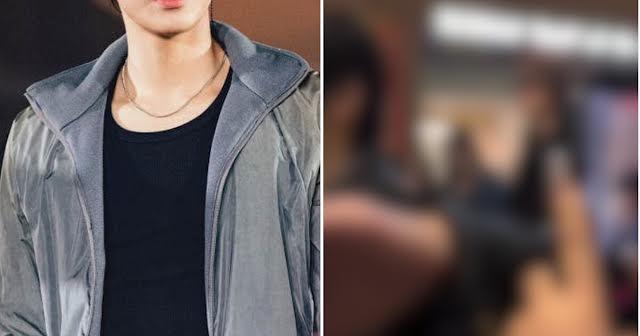
Koreaboo reported on 19 November that CORTIS's Seonghyeon drew widespread attention after a clip from an airport showed him pushing a fan's phone away as she got too close. The group were at the airport ahead of the Mnet Music Awards, and footage of the large crowd around them began circulating online. In the clip, Seonghyeon uses his arm to move the phone out of his space.
The report describes the fan as a sasaeng, a term used for obsessive fans whose behaviour crosses into invasion of privacy.
The moment matters because it is unusually direct. Idols moving through airports are often filmed at close range, and most keep their heads down or keep walking. A visible physical response stands out, and it immediately became a talking point. A widely shared post claimed it was the first time Seonghyeon had reacted physically like that and described him as visibly annoyed; that framing comes from a fan post, not from Seonghyeon or his agency.
Koreaboo's report does not say whether the person was identified or whether any agency action followed.
Why the reaction landed well with fans
According to Koreaboo, netizens praised Seonghyeon's reaction, particularly because of how close the fan was to him. The report notes that online users have wanted idols to respond more firmly to the huge and sometimes dangerous crowds that gather at airports, which can pose a safety risk to idols and to others in the building. The praise, then, is less about enjoying conflict than about seeing a boundary enforced in real time.
The responses also had a lighter, more conflicted tone. One post called him sassy; another simply said “good job boy”. Others focused on the person filming, asking why someone would keep recording after being pushed away. That mix is typical of airport clips: a serious safety issue arrives wrapped in fandom humour, and the same footage can be read as a funny moment, a just punishment or evidence of how bad crowding has become. The praise does not settle the argument.
It shows how ready audiences are for idols to be allowed a reaction.
The airport is where fandom and safety collide
Airports are one of the few places where fans can see idols in transit, and they are not built for fandom events. Security lines, exits and walkways are shared with ordinary travellers. When a crowd forms, the risk is not only to the idol in the middle. Phones held up at face height can block sightlines, and people can be pushed into doors or barriers.
The sasaeng label in Koreaboo's report points to a more extreme kind of pursuit, but the crowding itself is the immediate problem.
That distinction matters because airport footage often flattens it. A clip can make a chaotic scene look like a meet-and-greet with bad manners, when the reality is a group of people trying to move through a public building. Idols are not performing at that point. They are travelling, and the people around them are not an audience in the usual sense. The setting is ordinary; the expectations placed on it are not.
From crowding to stalking: where agencies draw the line
Koreaboo's report uses the word sasaeng, and that label points to behaviour beyond a single close phone. K-pop's most serious fan intrusions involve pursuing idols to private locations, obtaining personal contact details, or recording conversations without consent. Those are not the same as an airport crowd, but they exist on a continuum of access that some fans feel entitled to. The airport is where that continuum becomes visible in public.
K-Beats has reported on BELIFT LAB's criminal complaint over alleged stalking of ENHYPEN's Jay, which involved a private phone number, secret recordings and their spread online. That case shows agencies are prepared to treat some fan behaviour as a legal matter, not just a PR problem. The Seonghyeon clip has not been framed that way in Koreaboo's report, and there is no suggestion that it involved the same conduct.
Its value is as a reminder: the difference between a devoted fan and a sasaeng is not always a clear line in the moment, and the people in the middle are the ones who have to enforce it.
Praise, discomfort and the content trap
The praise for Seonghyeon comes with an awkward side effect. The clip is evidence of a boundary being crossed, but it is also content. It spreads because people want to see the moment, and the person who got too close is still part of the story. Fans who share it to say “this is not okay” are making a useful point; the circulation itself can still reward the behaviour that caused it.
That tension is not unique to CORTIS, but it is sharp here because the reaction is physical and easy to replay.
There is also the question of what idols are expected to tolerate. K-pop places a high value on politeness and composure, and an idol who reacts can be called rude as easily as brave. In this case, the weight of online reaction went the other way: many people were glad to see someone refuse the phone. That suggests an audience that is tired of watching idols absorb intrusion for the sake of a calm image.
The risk is that one viral reaction becomes a template for every airport clip, when the circumstances around each one can differ.
What it means for CORTIS
For CORTIS, the clip adds a public association that has nothing to do with a release or a stage. The group were travelling ahead of the Mnet Music Awards, and airport footage is now part of how groups are seen between official appearances. A moment like this can shape how audiences read a member's personality: direct, unbothered, willing to push back. That is a limited reading of a single clip, but it is how fandom narratives often start.
The more useful association would be with the conversation about crowd control. If the story ends at “he pushed the phone away and everyone cheered”, little changes. If it prompts promoters, airports and fan communities to think about spacing and security around transits, the clip has done more than provide a few days of discourse. What remains is the footage and the reaction to it.
The boundary has to come from somewhere
Practical change would not need a dramatic new policy. Airports and event organisers can create clearer routes for artists in transit, keep fans behind defined barriers, and treat crowding as a safety issue rather than a photo opportunity. Fan communities can also set their own expectations: no running after idols, no blocking exits, no shoving phones into faces. These are not abstract requests. They are the minimum for letting someone walk from a car to a terminal without being touched.
The Seonghyeon clip is a small gesture with a large subtext. It says that an idol can be visibly annoyed and still be in the right. The online praise suggests many fans agree. The harder work is making that boundary normal before an idol has to raise an arm. Close access is not the same as closeness, and a phone screen is not a relationship. If the conversation ends with a viral clip, the same scene will repeat.
If it ends with better spacing and clearer rules, the clip might actually change something.