
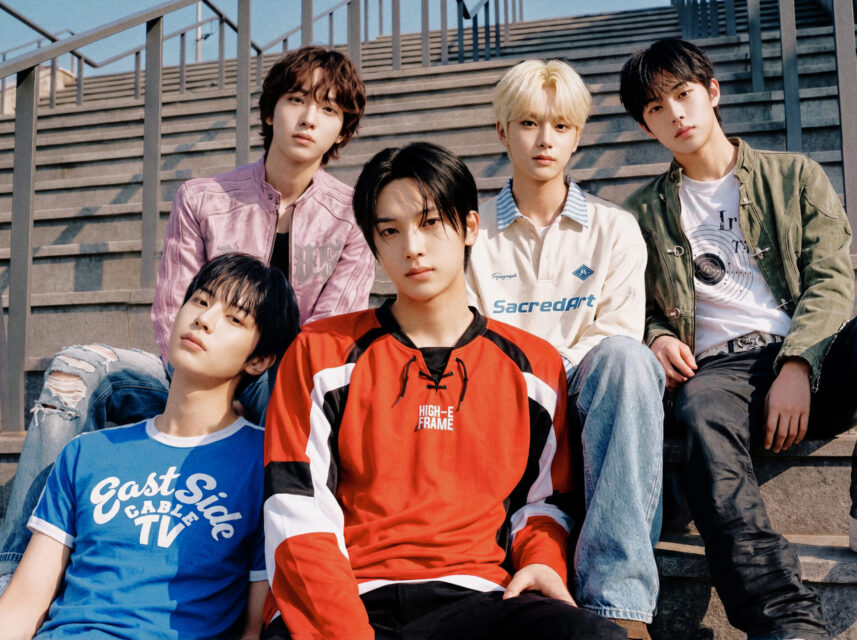
Stone Music Unveils muuo, an AI Boy Group With Convincing Faces
Stone Music shared a pre-release single for muuo, a new five-member boy group, on 14 October, according to Koreaboo. What set the release apart was not the music alone but the nature of the group: muuo is an AI act, and the video introducing the track quickly went viral for the wrong reasons. Viewers pointed out that the members' faces appear to resemble a range of real K-pop idols, including figures from TXT, ENHYPEN, TWS and ZEROBASEONE.
The significance is immediate and practical. Virtual and AI-assisted groups have existed for years, but they previously looked unmistakably synthetic or heavily stylised. muuo's visuals are convincing enough that the central conversation has shifted from novelty to likeness, consent and the boundaries between artificial performers and the human stars whose faces may have informed their design. For an industry built on distinct, carefully cultivated individual images, that is a difficult line to blur.
The Idol Comparisons Fans Cannot Unsee
The resemblance claims were not vague. Koreaboo reports that netizens identified similarities to well-known performers across several active groups, naming TWS's Dohoon and Sungho, ZEROBASEONE's Sung Hanbin and artists from TXT and ENHYPEN among the apparent reference points. A still from the promotional material also placed an AI member beside soloist Lee Hangyul, a comparison that circulated widely.
Fan reaction on X was swift and largely critical. One post described the resemblance as uncanny and unsettling, while another said it was possible to place exactly which real idols the AI members seemed to be modelled on. A separate comment noted that one member appeared to have been generated from a specific idol's likeness. The tone across the responses was not curiosity but discomfort, with many users expressing anger rather than intrigue.
It is worth being precise about what these comparisons are and are not. They are fan observations based on visual similarity, not confirmed statements from Stone Music about how the group was designed. Whether any real idol's likeness was used with permission, without it, or not directly used at all has not been confirmed in the source reporting. That uncertainty sits at the centre of the backlash.
Why This AI Group Feels Different From MAVE: and SUPERKIND
Koreaboo notes that the concept of an AI or virtual group is not new. MAVE: and several members of SUPERKIND preceded muuo, but both of those acts have since disbanded, and neither presented its members as convincingly human in the way muuo appears to. Their designs read as avatars or digital characters; muuo's promotional material reads as a standard boy group until the viewer learns otherwise.
That gap matters because it changes the stakes. Earlier virtual groups were judged mostly on their music and on whether the technology could sustain a believable act. muuo is being judged on identity. When an AI performer looks like a composite of several real idols, fans do not just see a new group. They see their favourites refracted through a machine, and they react accordingly.
The shift also raises questions about how audiences will receive future AI acts. If the visual quality continues to improve, the line between a virtual idol and a digitally reconstructed human will become harder for casual viewers to spot. muuo may be an early test of whether fans accept that ambiguity or reject it outright.
The Unanswered Question: Where Did Those Faces Come From?
The strongest source of unease in the fan response is the implied origin of the members' appearances. If an AI group is trained on or modelled after existing performers, questions arise about credit, compensation and control over one's own image. None of those questions has been answered in the reporting, and it is important not to assume a particular answer.
K-pop already has a complicated relationship with likeness. Real idols sign contracts that govern how their faces and names can be used, and those agreements typically do not anticipate an AI model learning from their features. The fan reaction to muuo suggests that audiences are beginning to think about this even when the industry has not settled on a framework. The discomfort is not only about one group but about what the next wave of AI entertainment might treat as normal.
Stone Music has not publicly addressed the resemblance claims in the reporting that prompted this article. That absence leaves the central question open: whether the similarities are a deliberate design choice, an unintended byproduct of training data, or something else entirely. Until that is clarified, the debate will continue to run on inference rather than confirmed fact.
Trainees, Resources and the Human Cost Argument
Another strand of criticism moves beyond likeness and into opportunity. Koreaboo reports that some fans expressed disgust that resources were being directed towards an AI group while many real trainees continue to wait for a debut that may never come. One widely shared post asked why an AI act was being launched when so many aspiring idols were still in the pipeline.
The concern is not new, but it lands differently in K-pop, where the trainee system is central to the industry's identity. The idea that a company might invest in a virtual performer over a human one touches a nerve because it suggests a future in which the supply of real idols is no longer necessary. Whether that future is realistic is a separate question, and the source does not offer evidence that muuo has replaced or will replace any specific trainee debut.
What the reaction does show is that fans are not evaluating AI groups purely on entertainment value. They are weighing them against the human labour and aspiration that have traditionally defined the genre. That makes muuo a flashpoint not just for technology but for the economics and ethics of the K-pop pipeline.
AI's Environmental Footprint Enters the K-Pop Conversation
A further objection raised by fans concerns the environmental cost of AI. Koreaboo reports that some responses criticised the use of resources for an AI group, with one post arguing that people were damaging the planet for the project. The criticism was not detailed, but it reflects a growing awareness that generative AI carries an energy and water footprint that is easy to overlook when the output is a polished music video.
K-pop has increasingly been drawn into environmental conversations, from album manufacturing to touring emissions. AI adds a new dimension because the resource use is less visible than a physical product or a flight. Fans who follow sustainability debates in the industry may now start asking companies to account for the compute behind virtual acts as part of their broader environmental impact.
It is difficult to assess how much energy muuo specifically required, and the source does not provide figures. The point is that the question has entered the fan conversation, which means it is likely to stay attached to future AI group announcements regardless of how this particular debut performs.
What This Means for the Virtual Idol Experiment
The disbandment of MAVE: and SUPERKIND suggests that virtual groups have struggled to build lasting audiences, even when they were not accused of imitating real people. muuo faces a harder path because its promotional strategy appears to lean on visual familiarity with existing idols, which has generated attention but also immediate resistance.
That does not mean the experiment is over. It means the terms have changed. An AI group that resembles real performers can generate massive engagement, but engagement is not the same as acceptance. The fan response so far has been defined by accusations and unease rather than curiosity about the music itself. If Stone Music wants muuo to be judged on its songs, the visual resemblance debate will have to be addressed rather than ignored.
The broader industry will be watching closely. Companies considering similar projects now have a case study in what happens when AI visuals become too convincing and the reference points are too recognisable. The lesson may be that technical capability is not the same as creative licence, and that audiences will notice the difference even when a company does not spell it out.
The Takeaway: A Test Case for AI in K-Pop
muuo's pre-release single arrived on 14 October with a viral introduction video and a fan response dominated by allegations of likeness theft, trainee resource concerns and environmental criticism. The group is a five-member AI boy group from Stone Music, and its members' visuals have been compared to idols from TXT, ENHYPEN, TWS and ZEROBASEONE, as well as soloist Lee Hangyul. Those comparisons remain fan observations, not confirmed design disclosures.
The practical takeaway is that AI groups have reached a point where they can no longer be treated as a novelty separate from the rest of the industry. They raise real questions about consent, compensation, creative labour and environmental cost, and fans are already asking them. How Stone Music responds, and whether muuo's music can carry the conversation beyond the backlash, will shape how the next AI act is received.
K-Beats Radio will continue to follow how this story develops, including any response from the company or further details about the group's creation. For now, muuo stands as a test case: an AI act whose biggest challenge may not be its technology but the human faces it reminds everyone of.
