

The post, the clue and the missing names
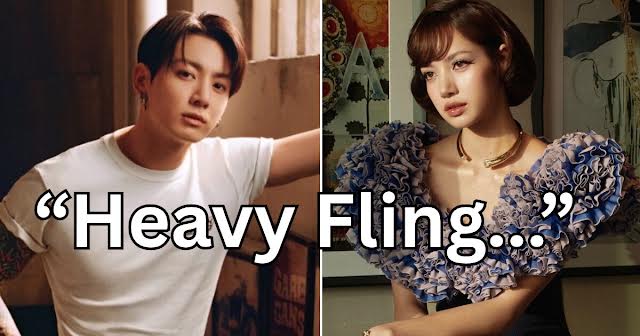
Koreaboo reported on 24 November that an anonymous blind item, posted a day earlier by the account Enty Lawyer, had set off a row after readers interpreted it as a claim about BTS's Jungkook and BLACKPINK's Lisa. The post named nobody. It asked which youngest member of a 'two-colored girl group' and which youngest member of a 'three-alphabet boy group' had allegedly rekindled something after a messy situation years earlier, and it placed the original fling in 2019.
That is the substance of the claim as published. Koreaboo's account contains no document, no on-the-record source and no confirmation from either artist or their representatives. What follows, then, is a story about how a coded post travelled through fandom — not a story confirming anything about two people's private lives.
Why the clues pointed where they did
The wording functioned as a set of crossword clues. BLACKPINK's name supplies the two colours; BTS is commonly shortened to three letters. Add the emphasis on each group's youngest member and the shape of the answer becomes obvious to anyone already familiar with both acts.
That is how blind items work. The poster never identifies a subject, so the audience completes the identification and the claim spreads without ever being printed in full. Fans did the decoding within hours, and Koreaboo's report reflects that. The speed is worth noting because it can look like corroboration when it is really just recognition: a large number of people arriving at the same reading of the same clue is not the same as a large number of people knowing something.
Where the pushback came from
Koreaboo records a wave of sceptical replies, and they clustered around a few specific complaints rather than a single objection. One was volume. Posters counted several BTS-related blind items circulating in the same week and one reply joked about how many alleged girlfriends had been attached to the same idol in a short span — a comment about the pace of the claims, not their content.
A second complaint was vocabulary. Several readers argued that phrases in the post sounded like fandom shorthand rather than the way an industry insider would write, and said so bluntly. One reply claimed the poster had lost credibility by borrowing the register of K-pop Twitter. A third complaint targeted the post's framing of its own novelty.
Replies pointed out that a Lisa and Jungkook pairing has been one of the most widely discussed fan 'ships' in third-generation K-pop, which sits awkwardly with a post implying that the connection was a surprise nobody had guessed.
Taken together, the objections were about craft and credibility as much as truth. Readers recognised a formula and said it looked like a formula.
A rumour with years of groundwork
The item did not arrive cold. Koreaboo notes that rumours and ships involving Lisa and Jungkook have circulated for years, and links to earlier coverage of a viral 'couple item' that resurfaced dating speculation between them. That background explains the immediate recognition in the replies — and it also explains the frustration.
Long-running shipping culture builds a ready audience for anything that appears to confirm a familiar narrative. A coded post can then travel on the strength of prior conversation rather than new information. This is the part of rumour cycles that gets lost when a claim is discussed as a discrete event: the item is new, but the story it appears to confirm is old, and the two get conflated. Familiarity is doing the persuasive work that evidence would normally do.
How Lisa's documentary got drawn in
Koreaboo reports that the blind item also referred to comments Lisa made in her recent documentary, which some viewers had already been combing through in an attempt to identify a mystery ex, with Jungkook's name raised in that discussion. The item, in other words, joined an interpretive game that was already running.
Documentary material is especially easy to repurpose this way. A reflective remark about a past relationship can be clipped out of context and matched to a name, and the match then circulates as if it were a finding. The documentary reference adds a surface texture of specificity to the blind item without adding verifiable detail. It makes the claim easier to talk about; it does not make it firmer.
The pattern this fits
There is recent precedent for the shape of this cycle. A previous blind item about BTS's V and BLACKPINK's Jennie prompted a similar sequence: an anonymous claim drew a name through fandom deduction, and much of the response treated it as comedy rather than as reporting. K-Beats has also covered a separate viral attempt to link Jungkook to another artist through clips that readers judged thin.
Seen together, these episodes suggest the format is now familiar enough that audiences can spot its stages — the coded post, the rapid decode, the quote-post wave and the sceptical correction. That familiarity is useful. It means the burden of proof is being discussed openly rather than left implicit, and it means readers are increasingly likely to ask what a claim rests on before passing it along.

What the row is actually testing
The disagreement here is not a verdict on whether these two idols were ever involved. It is a disagreement about evidence, and specifically about who should be required to supply it. Readers who pushed back were asking why an anonymous post with unnamed subjects should be discussed as news at all, and why the burden of proof appeared to sit with the audience rather than the poster.
The ambiguity is the format's engine. A blind item gives readers enough detail to reach a name while leaving the author room to say no name was given. The audience does the identifying; the post collects the attention. Interpretation, offered plainly: that structure is why the sceptical replies arrived so fast and so specific, and why they focused on wording and volume rather than on denial.
The practical test for readers is straightforward. Does the item name anyone? Does it offer evidence that can be checked against something outside itself? Has anyone involved confirmed it? Where the answer is no on all three, the story is about the rumour rather than about a relationship. Koreaboo's report is framed that way, describing the post and the reaction to it rather than asserting the underlying claim.
The takeaway
A coded post briefly became one of the most discussed K-pop topics of the day, and thousands of people recognised the machinery behind it. That recognition is the useful part. Blind items are built to be decoded, and K-pop fandoms are unusually good at decoding them, but decoding speed is not proof and repetition is not corroboration.
The next time a similar item circulates, the most valuable response may be the least dramatic one: note what was actually published, note who was never named, and ask what would have to be true for the claim to be checkable.