
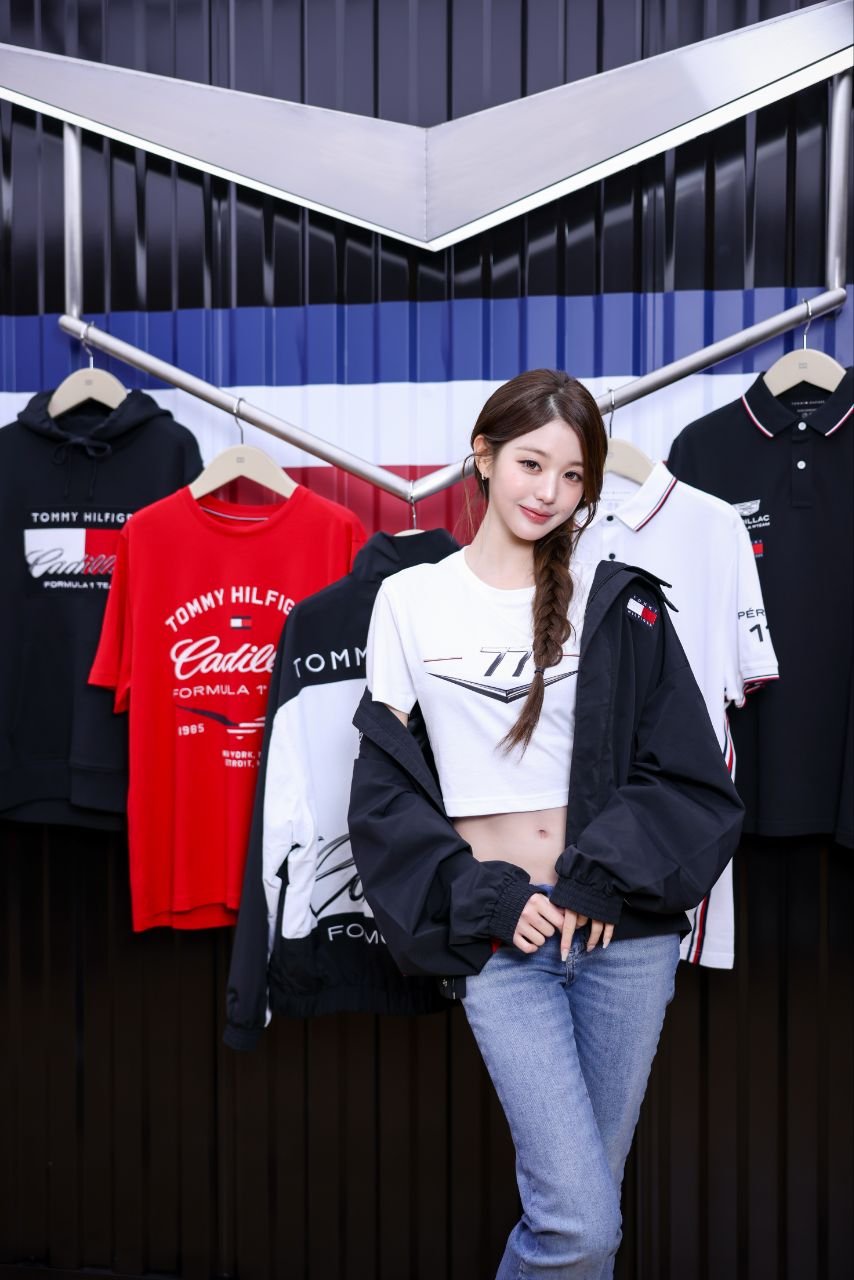
Jang Wonyoung at the Tommy Hilfiger x Cadillac F1 Pop-Up
IVE's Jang Wonyoung attended the Tommy Hilfiger x Cadillac F1 Pop-Up on 11 October, according to original reporting by Koreaboo, and also appeared at the Singapore Grand Prix as part of the collaboration. She was photographed at the event and around the track, wearing a dress in the brand's signature red, white and blue.
The appearance placed her in a global fashion and motorsport setting rather than a music show or fan event. Fan photography and professional press coverage both captured her across the weekend, and images taken by Getty Images in particular became a talking point online.
Koreaboo reported that a post discussing the photos circulated widely, with commenters focusing on the photography itself rather than on Wonyoung. That distinction is central to what made the reaction notable: the criticism was aimed at the camera, not the subject.
Why Getty Images Photos Attract So Much Attention
Getty Images has a reputation for unfiltered, unedited event photography, often capturing celebrities in harsh or unflattering light. In K-pop fan communities, the phrase 'Getty Images curse' is used as shorthand for the challenge of being photographed by the agency at public events.
The source notes that Wonyoung has previously been seen as 'beating' that curse, including at a Dior event. That history helps explain why her latest Getty photos drew attention so quickly: the expectation is that Getty images are difficult to control, and an idol who emerges looking composed is praised for it.
The reaction reported by Koreaboo fits that pattern. Netizens criticised the angles and lighting rather than Wonyoung herself, and several framed her as someone who had survived a difficult set of conditions. The focus was on the photography as a test, not on any wrongdoing or controversy.
The Viral Reaction: Criticism Aimed at the Camera
According to Koreaboo, netizens weighed in on a post that became a hot topic. One comment said Wonyoung had survived a ruthless angle from Getty. Another said she remained pretty despite the proportions captured in the images. A third remarked that if even Wonyoung looked that way in those photos, an ordinary person would fare worse.
The tone was largely complimentary, but the framing is worth noting. The praise depends on the idea that the photos are unusually harsh, which turns the image set into a test of visual endurance. The compliment is built on the premise that the conditions were against her.
It is also worth being precise about what this represents. The source reports these as netizen comments on a viral post, not as a formal poll or a representative sample. They show how a segment of online observers reacted, not a universal view across all fans or the public.
The 'Getty Curse' and the Limits of Unfiltered Photography
The 'Getty curse' is a fan shorthand rather than an official term, but it reflects a real dynamic in celebrity photography. Event images are often taken quickly, in mixed lighting, from angles that are not controlled by a subject's team. Promotional and editorial images usually offer more favourable conditions.
For K-pop artists, whose public image is often shaped by highly polished concept photos and stage lighting, an unfiltered event photo can become a contrast point. That contrast can generate discussion about authenticity, beauty standards and the gap between curated and candid images.
The source notes that Wonyoung has been praised before for handling Getty images well. That history is likely why this latest set drew attention so quickly. The conversation is not really about whether she attended the event; it is about how a particular style of photography interacts with the visual expectations placed on idols.
A Fashion and Motorsport Crossover with Global Reach
The Tommy Hilfiger x Cadillac F1 Pop-Up and the Singapore Grand Prix represent a crossover between fashion and motorsport. Such events attract international media and fans, and K-pop artists increasingly appear in these spaces. Wonyoung's attendance was part of that collaboration.
She was photographed by fans and by Getty Images, and was seen at the track during the Grand Prix weekend. The setting places her in a different environment from a music show or a fan event, where lighting and angles are more controlled.
The Grand Prix context also means the images circulated across sports and fashion audiences, not only K-pop fans. That broader audience can amplify a photo set beyond its usual reach. A single event appearance can therefore generate a conversation that extends well past the artist's core fandom.
The source does not detail the terms of the collaboration or Wonyoung's specific role beyond her attendance. What is clear is that the event combined a major fashion brand and a Formula 1 team during a high-profile race weekend, giving the images a global platform.
What the Conversation Says About Visual Expectations
The reaction reported by Koreaboo is double-edged. On one hand, it defends Wonyoung by blaming the photography. On the other, it reinforces the idea that an idol's appearance must withstand any condition. The praise can become another way of measuring someone against an impossible standard.
Comments that compare her to an 'ordinary person' make the comparison explicit. They frame the photos as a baseline that most people could not meet, which can normalise a narrow standard of appearance even when the intent is complimentary. That is a pattern worth noticing in how online discussions about visuals develop.
There is a difference between discussing photography techniques and scrutinising a person's body. The source emphasises that the criticism was directed at the photos, not at Wonyoung. Keeping that distinction clear is important when a story like this spreads, because the line between critiquing an image and evaluating a person can blur quickly.
For readers, the useful question is not whether Wonyoung looked good under difficult conditions. It is how the industry and its audiences talk about those conditions, and whether the conversation stays focused on the craft of photography rather than on the individual in the frame.
Takeaway: A Photo Set, Not a Scandal
This is not a controversy about Wonyoung's conduct or a major career development. It is a viral conversation about event photography and the expectations placed on a well-known idol. The story's significance lies in what it reveals about how fans, media and brands interact around images.
The original reporting comes from Koreaboo, which captured the event details and the netizen reaction. The broader point is that in K-pop's global event circuit, a single set of photos can become a story in itself. That is a familiar feature of the fandom landscape, and it shapes how artists are discussed online.
As more images from the weekend circulate, the conversation may continue. The most useful takeaway is that the debate is really about the conditions of photography and the standards audiences bring to them. Wonyoung attended the event; the rest is a debate about how we look at the pictures.

