Opening: A Confession That Cracked the Facade
In the meticulously choreographed world of K-Pop, where every smile, every wave, and every position on stage is a calculated variable in an equation for success, some truths are meant to stay behind the company doors. This week, that carefully maintained veneer was pierced by a moment of startling vulnerability. Choi Yoojin, a member of the mid-tier girl group LUNAtic, during a candid livestream with fans, addressed a years-old wound that speaks to the very core of idol insecurity and corporate manipulation. She revealed, her voice a mixture of resignation and lingering hurt, that her former company had a deliberate, unspoken policy: for a significant portion of LUNAtic’s early promotions, Yoojin was instructed to stand immediately next to the group’s designated “visual” member, Seo Mina, during interviews, photoshoots, and even certain stage formations. The reason? Not for chemistry, not for vocal balance, but as a blunt, comparative tool.
"They told the staff, and it eventually filtered back to me, that placing me beside Mina would ‘highlight her beauty even more’ and create a ‘favorable contrast’ for the cameras. I became a living, breathing prop to make someone else shine. For years, I looked at those photos and videos and didn't see myself—I saw a shadow, a ‘before’ picture. It wasn't just about standing in a spot. It was about my entire self-worth being strategically diminished."
This isn't a story about simple jealousy or intra-group rivalry. Yoojin’s admission has ignited a firestorm, forcing a long-overdue conversation about the psychological warfare of “visual profiling,” the unethical deployment of “visual proximity” as a strategy, and the silent suffering of idols who don’t fit a narrow, often ruthless, standard of beauty. It’s a peek into the engine room of the idol machine, where human beings are sometimes treated as aesthetic chess pieces in a game of public perception.
Background: The Ascent and Internal Fractures of LUNAtic
To understand the weight of Yoojin’s words, one must understand the trajectory of LUNAtic. Debuted in 2022 under Starspark Entertainment, the five-member group entered a saturated market with a unique concept blending celestial mythology with a dark, orchestral pop sound. Their debut track, “Eclipse,” garnered moderate attention for its ambitious production and strong vocal line, led notably by Yoojin herself. From the outset, however, the media and fan focus bifurcated sharply. Seo Mina, with features that aligned perfectly with prevailing Korean beauty standards, was instantly crowned the group’s visual center, plastered on magazine covers and becoming the focal point of most thumbnail images. Yoojin, praised for her powerful, emotive vocals and charismatic stage presence, was nonetheless frequently subjected to vicious online commentary about her looks, particularly in comparison to Mina.
The group’s management, rather than shielding Yoojin or promoting the members’ individual strengths, seemingly leaned into the dichotomy. As detailed in our analysis of group dynamics in "The Monthly Shake-Up: Which Acts Are Surging and Stalling in K-Pop's 2026 Spring Season?", a group’s internal balance is often as critical as its music for long-term stability. For LUNAtic, that balance was artificially and damagingly skewed. Fan-cams would overwhelmingly feature Mina; variety show edits would consistently pair the two together, often with comedians making unscripted “compare and contrast” jokes that were left in the final broadcast.
“The company saw the online chatter as free publicity, a ‘narrative,’” a former Starspark trainee, who wished to remain anonymous, told K-Beats. “The idea wasn’t to build up Yoojin’s confidence or showcase her talents in a new light. It was to amplify the existing narrative because it was getting clicks. Placing them side-by-side was a physical manifestation of that strategy.” The emotional toll on Yoojin was evident to keen-eyed fans—a gradual dimming of her smile in group content, a hesitancy in interviews that wasn’t there at debut. The strain culminated in 2024 when Yoojin unexpectedly halted activities for two months, citing “extreme stress and anxiety.” The group continued as four, a period many now view through a new, tragic lens.
The News: Deconstructing the "Visual Proximity" Strategy
Yoojin’s livestream confession was not a planned exposé but a raw response to a fan’s heartfelt comment praising her recent solo growth. The dam broke. She detailed how, after debut, the group’s head stylist and a creative director sat the members down for a “formation briefing.” While the discussion was framed around “creating memorable visual tableaus” and “maximizing camera impact,” the subtext for Yoojin became painfully clear.
The Mechanics of Comparison
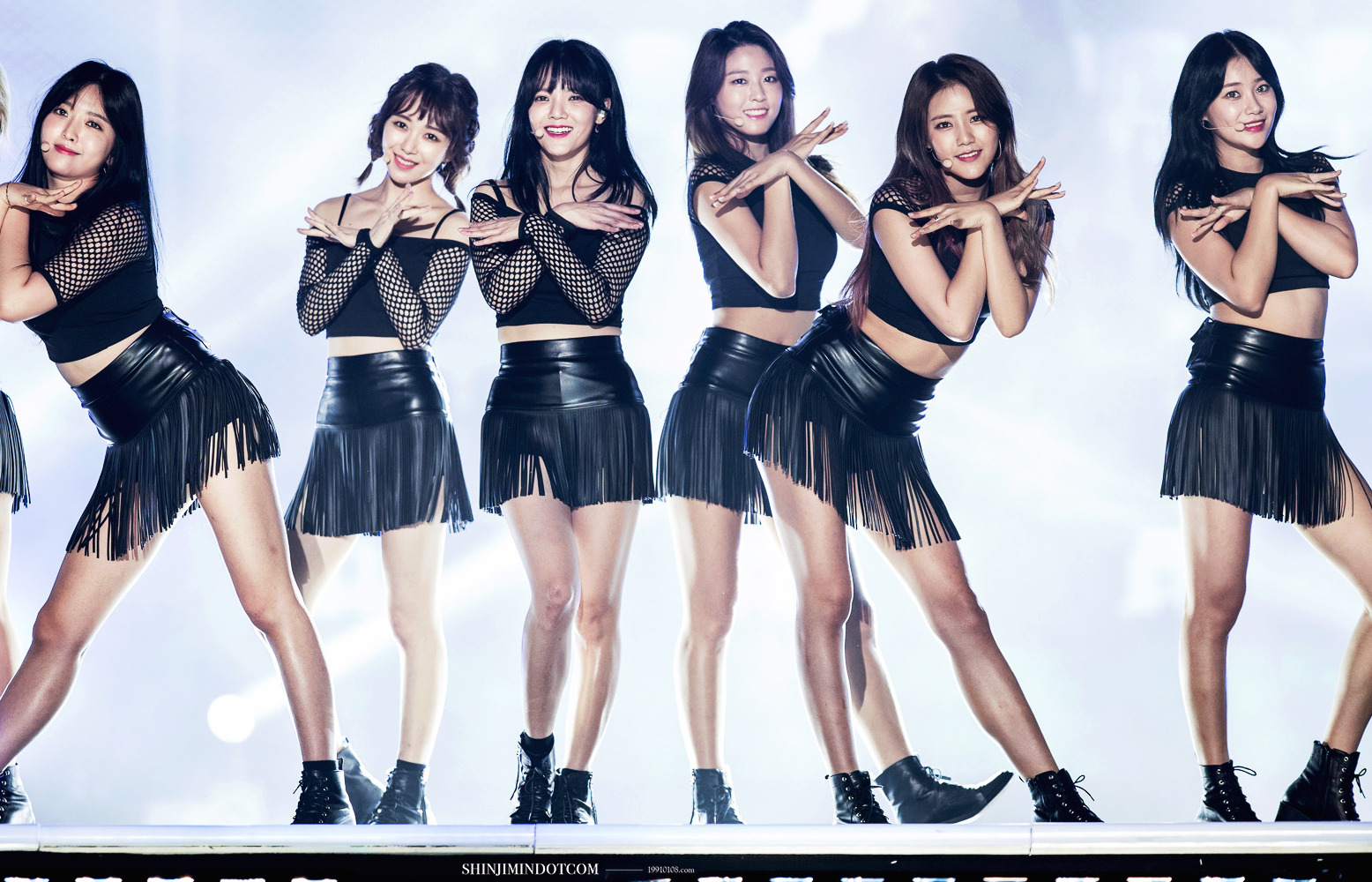
The policy, as she described it, was rarely written but strictly enforced. For talk show appearances, Yoojin and Mina were to be seated adjacently. For photo shoots, they were paired for “concept shots.” On stage during non-choreographed moments like introductions or encore stages, managers would subtly guide Yoojin to stand next to Mina. “It was presented as if it were for cohesion, but the staff’s whispers and the resulting media play told the real story,” Yoojin shared. “Articles would come out with titles like ‘LUNAtic’s Fairy and Her Charismatic Companion’ or ‘Visual Shock: The Stunning Difference Between LUNAtic Members.’ I was always the ‘charismatic companion,’ the ‘difference.’”
This practice taps into a deep, psychologically potent phenomenon. By forcing constant, direct juxtaposition, the company artificially amplified a specific narrative. It turned subjective preference into an objective, staged reality. Every frame containing both members became a supposed “proof” of Mina’s superiority, systematically eroding Yoojin’s self-image. This goes far beyond typical idol positioning, where visual members are often centered. This was targeted, comparative placement with the explicit intent of using one member as a foil.
The Breaking Point and Aftermath
The breaking point, Yoojin revealed, was during preparations for their 2023 comeback, “Lunacy.” In a costume fitting, a high-ranking company executive (whom she did not name) pointed at Yoojin in a sample outfit and remarked, “See? This styling on her makes Mina’s elegance pop even more. It’s perfect.” The comment, meant as a passing observation on the rack of clothes, was the final straw. “I realized I wasn’t being seen as a person or an artist,” she said, her eyes welling up on stream. “I was a styling tool, a contrast filter. That’s when the anxiety became unbearable.” This directly connects to the pressures explored in "Wanna Know the Truth? Jang Haneum's Solo Debut is a Defiant, Soulful Resurgence," which examines an artist reclaiming their narrative after industry limbo.
Yoojin’s contract with Starspark Entertainment was terminated by mutual agreement in late 2025. Mina and the other members of LUNAtic remain with the company. Since her departure, Yoojin has been pursuing a solo career under a smaller, artist-focused agency, working primarily in musical theatre and preparing her own music. Her confession was a reflection on her past, not an attack on her former group members, whom she repeatedly stated were supportive in private. “This was a company strategy. The members were just pieces on the board, like me.”
Fan & Community Reaction: Outrage, Heartbreak, and a Flood of Shared Stories
The reaction from the K-Pop community was immediate and seismic. The hashtag #StandWithYoojin trended globally on Twitter/X, while #VisualProximity became a forum for fans to dissect similar patterns across the industry.
- LUNAtic’s Fandom (LUNAs): The fandom fractured along painful lines. Many expressed heartbreak and rage, posting side-by-side comparisons of old content with new captions like “We see you now” and “They made us complicit.” A significant fundraiser was launched to support Yoojin’s solo endeavors. However, a subset of Mina’s fans (“Mina-tics”) reacted defensively, arguing that Yoojin was “bitter” and “dragging Mina for clout,” a response that only highlighted the toxic comparison mindset Yoojin was describing.
- The Broader Idol Fan Community: The confession acted as a key, unlocking a torrent of similar anecdotes from fans of other groups. Supporters of older second and third-generation groups recalled infamous “visual lines” and how certain members were perpetually sidelined in photos. Fans of current mid-tier groups pointed out suspiciously consistent interview pairings and “beauty ranking” edits on variety shows. The conversation expanded beyond girl groups, with fans of boy groups noting similar “visual vs. talent” dichotomies enforced through staging and media focus.
- Industry Insiders Weigh In: Several anonymous producers and choreographers spoke to online news outlets, corroborating that such strategies, while not universal, are “not uncommon.” One choreographer stated, “The ‘visual foil’ is a known, if ugly, tactic in some smaller companies desperate for a viral angle. It’s short-term gain for long-term human cost.”
The outrage has translated into tangible action. A petition on the Korean civic portal demanding the Fair Trade Commission investigate “discriminatory and psychologically abusive contractual practices” in entertainment companies has garnered over 150,000 signatures in three days. For more on how fan sentiment shapes careers, explore our K-Beats Charts and community data.
Industry Analysis: The Systemic Rot Beneath the Glitter
Yoojin’s story is not an isolated incident but a symptom of a systemic issue within K-Pop’s production model. It intersects dangerously with several entrenched problems.
The Tyranny of the "Visual" Role: The formalization of the “visual” position, while often a harmless title, creates a hierarchy that can be weaponized. It commodifies a member’s appearance above all else and establishes a pecking order that management can exploit. When combined with the “variety” or “vocal” role, it can lead to reductive and harmful packaging.
The Psychology of Manufactured Insecurity: Some agencies operate on a model that fosters a degree of controlled insecurity to maintain dependence and compliance. By explicitly or implicitly reinforcing that a member’s value is relative and lesser, they become more “manageable.” Yoojin’s experience is an extreme example of this toxic psychology in practice.
Media Complicity: The strategy only works with a compliant media ecosystem. Outlets that publish “comparison” articles, YouTube channels that create “visual ranking” videos, and variety shows that encourage “look-alike” or “who’s prettier?” games are active participants. They provide the oxygen that allows this corporate tactic to breathe and inflict damage.
This moment represents a potential turning point, similar to when idols began speaking out about restrictive diets and sleep deprivation. The conversation is shifting from enduring hardship as a “part of the job” to identifying specific, exploitative practices. As the industry grows more global and faces greater scrutiny, such openly manipulative strategies become untenable. The public and fan appetite is evolving, as seen in the embrace of artists with diverse stories and authentic presentations, like the solo work discussed in "Irene’s ‘Biggest Fan’: A Minimalist Masterclass" and "Wonpil's Solo Gamble."
What's Next: Reckoning, Healing, and a New Path Forward
The fallout from Yoojin’s confession is still unfolding. Starspark Entertainment has issued a terse, two-sentence statement: “The details described are from the perspective of a former artist. We do not comment on internal operational matters,” a response widely criticized as a dismissive non-apology. Legal analysts suggest that while proving emotional distress in court is difficult, the public relations damage is severe and may affect their ability to attract new talent.
For Yoojin, the path forward is one of reclamation. Her upcoming solo single, reportedly a soulful ballad she co-wrote, is now one of the most anticipated releases of the season, no longer in the shadow of a forced comparison. Her story has given her a platform of immense empathy and resonance. For LUNAtic and Mina, the road is trickier. The group must navigate promotions under a cloud, with every formation and interaction scrutinized. Mina, though not the instigator, is now irrevocably linked to this controversy, a burden of perception she must carry.
For the industry at large, this is a clarion call. Talent agencies, particularly smaller ones, may now think twice before implementing such brazenly comparative tactics. Fans and media are now hyper-aware, and will likely call out similar patterns, creating a form of crowd-sourced accountability. The incident strengthens the argument for mandatory psychological support and stronger ethical guidelines within trainee and idol contracts.
Ultimately, Yoojin’s painful honesty has done more than share a personal trauma. It has held up a mirror to a dark corner of the K-Pop system, challenging the industry to live up to the messages of empowerment and self-love it often sells. The true test will be whether this leads to lasting change or is simply absorbed as another fleeting scandal. One thing is certain: the next time a company considers using a person as a prop for contrast, they will remember the name Choi Yoojin, and the global wave of support that answered her truth. For continued coverage on this evolving story and its impact, stay tuned to our K-Beats News hub.