
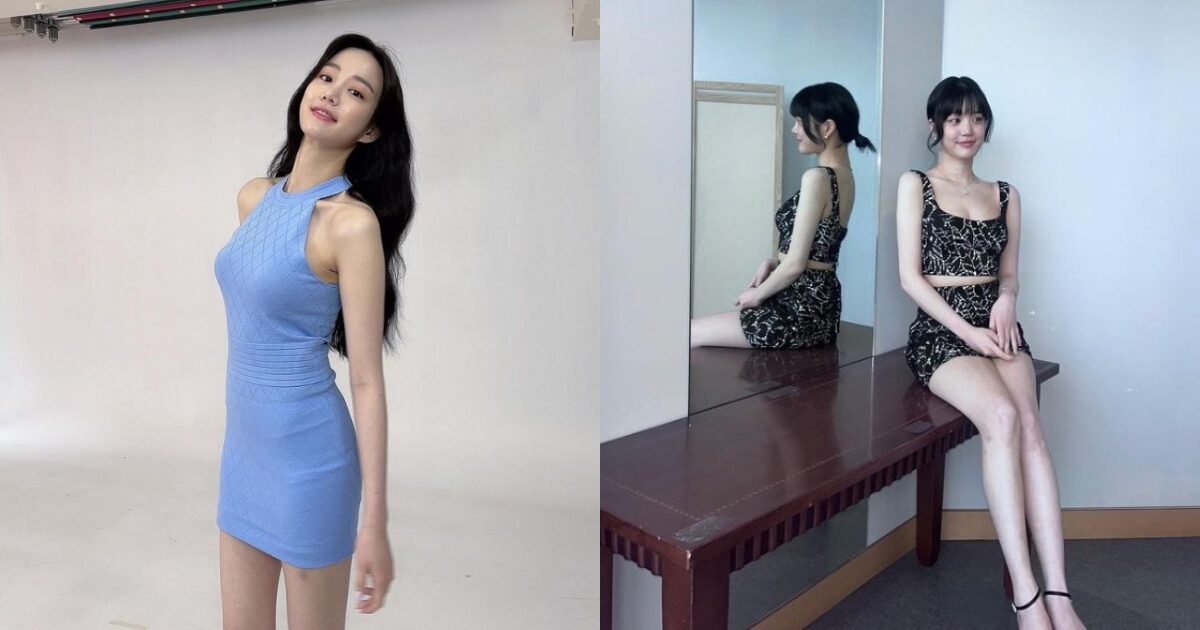
The world of Korean entertainment often presents itself as two distinct galaxies: the realm of the idol, governed by precise visuals, relentless schedules, and fiercely curated public personas, and the domain of the actor, where (theoretically) craft and character might take precedence. But what happens when those galaxies collide? When the expectations of one sphere bleed irrevocably into the other? This is the compelling, and at times uncomfortable, question raised by recent candid remarks from actress Lee Yu Bi.
Known for her roles in dramas like "The Gentlemen of Wolgyesu Tailor Shop" and "Goblin", Lee Yu Bi recently completed a photoshoot that required what she described as a last-minute physical transformation. In sharing the methods behind this change, she didn't just offer a glimpse into an actress's preparation; she inadvertently held up a mirror to the pervasive, often extreme, beauty and body standards that originate in the K-Pop idol system but now exert influence far beyond it. Her story is not just about one photoshoot; it's a case study in the silent pressures shaping an entire industry.
From Child Actress to "Idol-Like" Visuals: The Evolution of Lee Yu Bi
To understand the weight of her comments, one must first understand Lee Yu Bi's journey. She is not a rookie molded from the trainee system, but a veteran who entered the public eye as a child actress. Her career has been built on a foundation of acting chops and gradual public familiarity, a path traditionally distinct from the high-intensity idol debut model. Over the years, however, her public image has undergone a significant shift. Her delicate features, bright smile, and overall aesthetic have frequently earned her the label "idol-like" in media reports and fan discussions.
This label is a double-edged sword. It confers a certain level of celebrity, connecting her to the massive, globally engaged K-Pop fan ecosystem. Yet, it also subtly transplants the expectations of that ecosystem onto her. An idol's body is often viewed as part of their professional toolkit—a meticulously managed asset subject to constant scrutiny and commentary. For an actress whose primary currency has been her ability to embody diverse roles, this added layer of visual expectation represents a new professional frontier. As we explored in our analysis of soloist reinventions in "Wonpil's Solo Gamble", the pressure to present a specific, flawless image is a heavy burden for any artist navigating the modern Korean entertainment landscape.
The "Idol-Like" Mantle: Compliment or Constraint?
The term itself is revealing. In industry parlance, "idol-like" is rarely just about singing or dancing ability when applied to an actor. It is predominantly a visual descriptor, implying a specific kind of slimness, pore-less skin, and stylized beauty that matches the archetype perfected by idol agencies. For Lee Yu Bi, embracing this label has likely opened doors to certain fashion endorsements and photoshoots, but it has also arguably locked her into a more restrictive box. The photoshoot that prompted her recent revelation is a prime example—a project where the "idol-like" visual was not just an asset, but arguably the central requirement.
The "Last Minute" Regimen: A Breakdown of Methods and Madness
So, what did Lee Yu Bi actually do? In her sharing, she outlined a multi-pronged, intensive approach taken in the immediate days leading up to the shoot. It's crucial to note she presented these as her personal, time-sensitive methods, not universal advice. However, their nature is strikingly familiar to anyone following idol diet culture.
Her regimen reportedly included a drastic shift to a primarily liquid-based diet, focusing on protein shakes and specific, limited solid foods. She combined this with a rigorous daily exercise schedule, emphasizing cardio to accelerate caloric burn. But perhaps most telling were the ancillary tactics: extreme hydration protocols, meticulous management of sodium intake to minimize water retention, and a strict cutoff time for all food and liquid consumption each evening.
"It's for the work. You have a picture in your mind of the perfect result for the concept, and you do whatever you can, safely, to match that image in the short time you have," a sentiment she echoed, reflecting the professional "hwarang" mindset many entertainers adopt.
This "all-in" short-term strategy is a hallmark of idol promotions. Before comebacks, music video shoots, or major award shows, idols are known to undertake similar crash programs to achieve peak "camera-ready" condition. The goal is not necessarily long-term health or sustainable weight management, but a transient, photogenic result. Lee Yu Bi's adoption of this model underscores how these industry-standard practices have been normalized and disseminated, becoming a go-to solution for any entertainer facing a high-stakes visual moment.

The Science and the Strain
Nutritionists and fitness experts often warn against such rapid transformation techniques, highlighting risks like muscle loss, metabolic disruption, nutrient deficiencies, and a unhealthy relationship with food. The psychological strain is equally significant. The intense focus on the scale and the mirror, the constant hunger, and the self-denial required can take a toll, a reality idol leaders have begun to speak about more openly in recent years. By following this path, Lee Yu Bi temporarily subjected herself to the same physical and mental pressures that are a poorly-kept secret within the idol system.
Fan Reaction: A Chorus of Concern, Admiration, and Critique
The response from netizens and fans on forums and social media was immediate and multifaceted, reflecting the broader societal debate around such topics.
The Admiration Camp: Many praised her professionalism and dedication. Comments like, "She really has an idol's spirit for her work," and "Her willpower is no joke, she looks incredible," dominated spaces like Instagram and Naver article feeds. This perspective frames the extreme regimen as a sign of commendable work ethic and commitment to delivering the best for her fans and the project.
The Concerned Camp: A significant, and perhaps growing, portion of the reaction expressed worry. "Please stay healthy, that sounds too extreme," and "I wish the industry didn't require this of her," were common refrains. This group, often informed by past scandals and tragedies in K-Pop related to extreme dieting, views the methods as symptomatic of a toxic standard, not a virtue.
The Critical Camp: Some voiced frustration, arguing that by sharing these details, even casually, she inadvertently promotes unhealthy habits to impressionable fans. "This isn't a 'trick,' it's a disorder," one blunt comment read. This highlights the delicate responsibility celebrities hold; even an offhand mention of a restrictive diet can be taken as a blueprint by followers.
The division mirrors ongoing conversations within K-Pop fandoms themselves, where support for an artist's hard work often battles with anxiety over the costs of that labor. It echoes the discourse seen when idols like Jang Haneum debut with powerfully personal lyrics about struggle and identity, as noted in our review of "Wanna Know the Truth?"—fans are increasingly attuned to the human behind the image.
Industry Analysis: The Idol Standard as Export Product
Lee Yu Bi's situation is not an isolated incident. It is a symptom of a larger, systemic export: the K-Pop Beauty Standard. This standard, engineered over decades by idol agencies, emphasizes youth, slimness, and a specific facial aesthetic. Its success has been so global and marketable that it has become Korea's dominant cultural beauty export, influencing cosmetics, skincare, fashion, and yes, the expectations for all public figures.
For actors, this creates a paradoxical demand. They are expected to possess the "natural" authenticity of a thespian while also maintaining the "flawless" visual perfection of an idol. The rise of "acting-dols" (idols who act) and "idol-like" actors has blurred the line, raising the bar for everyone. A photoshoot is no longer just about wearing clothes; it's about embodying a lifestyle brand, a fantasy that aligns with the sleek, controlled imagery of K-Pop. In a competitive market, as analyzed in our feature "The Monthly Shake-Up", visual appeal is a quantifiable metric of success, driving trends across the board.
Furthermore, the "last-minute" nature of the effort speaks to the breakneck pace of the industry. Schedules are packed, opportunities arise suddenly, and the time for gradual, healthy preparation is often a luxury. The crash diet becomes a pragmatic, if harmful, tool in an entertainer's kit, a direct result of an ecosystem that prioritizes constant, impeccable output over sustainable well-being.
The Wellness Facade and Real Change
Interestingly, this occurs alongside a rising global and domestic trend toward "wellness" and "self-care." Idols speak of pilates, balanced diets, and mental health awareness. Yet, these narratives often coexist with evident physical pressures. The contradiction is stark. Lee Yu Bi's story peels back the wellness facade to reveal the old-school, grueling reality that still underlies many "perfect" transformations. True industry change would require not just individuals sharing crash diets, but a structural shift in scheduling, in casting preferences, and in the very definition of what is considered "camera-ready."
What's Next for Lee Yu Bi and the Industry?
For Lee Yu Bi, the immediate future likely involves promoting the photoshoot and returning to a more sustainable routine. The key question is whether this experience will lead her to publicly reframe such methods in the future, perhaps advocating for healthier paths, or if it will remain an accepted part of her job's exigencies. Her platform gives her a unique voice; she could choose to either normalize or challenge the status quo.
For the industry, this episode is another data point in a long-overdue conversation. The influence of idol culture on acting is undeniable and growing. The pressure is not diminishing. However, the vocal concern from fans is a powerful counter-force. As audiences become more sophisticated and compassionate, the demand for authenticity over austere perfection may grow. We are seeing glimmers of this in music, with artists like IRENE of Red Velvet exploring minimalist, emotionally raw concepts, as reviewed in "Irene's 'Biggest Fan'", which resonates precisely because it feels human, not manufactured.
The path forward is murky. The economic engine of K-Pop's visual standard is powerful. Yet, the hope lies in the very blurring of lines that created this pressure. As actors like Lee Yu Bi navigate the idol-adjacent space, and as idols themselves demand better treatment, there is potential for a new, hybrid standard to emerge—one that values health and artistry as much as it does a specific measurement on a scale. Until then, stories like these will continue to surface, serving as both cautionary tales and catalysts for reflection in the relentless, glittering world of Korean pop culture. For the latest on how these evolving standards impact music and charts, follow our ongoing coverage on our Charts page.
The final frame of Lee Yu Bi's photoshoot will be polished, beautiful, and "idol-like." But the more impactful image may be the one she verbally painted of the strenuous, hidden effort behind it—an image that asks us to consider what we celebrate, what we expect, and ultimately, what we are willing to accept as the cost of entertainment.